Info
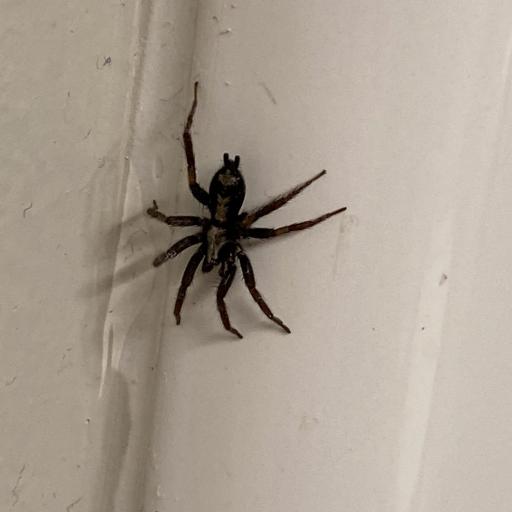
The Eastern Parson Spider gets its dignified name from the distinct white marking on its back, which early observers thought resembled the formal neckwear worn by 19th-century clergymen. While its lightning-fast movement across a wall might give you a start, this spider is a beneficial "roommate" that spends its nights hunting down actual household pests.
🔍 How to Identify
- 🧥 The Parson's Collar: Look for a prominent, jagged white or silvery-grey stripe on its dark abdomen that looks like a cravat or necktie.
- 🖤 Velvety Texture: Its entire body is covered in fine, short hairs, giving it a soft, matte black or deep brown appearance.
- 💨 The Flash: They are exceptionally fast runners. If you see a dark shape darting across the floor and disappearing under a baseboard in the blink of an eye, it’s likely a Parson Spider.
🌲 Habitat & Ecology
- 🏠 Nocturnal Nomad: Unlike the spiders that build messy webs in the corners of your ceiling, the Parson Spider is a "wandering hunter." It doesn't use a web to catch food; instead, it stalks its prey at night.
- 🦟 Pest Control: They are highly effective predators of flies, small moths, and even other spiders. During the day, they hide in silk-lined "retreats" found under bark, stones, or behind furniture indoors.
⚠️ Safety & Toxicity
- 🩹 Mildly Defensive: They are not aggressive toward humans and will usually run away. However, they may bite if trapped in clothing or accidentally squeezed.
- 🐝 Symptoms: The bite is not considered medically significant but can be painful—similar to a bee sting. Some individuals may experience localized swelling or a mild allergic reaction, so it is best to observe from a distance.
✨ Fun Fact
- 📜 The Silk Sleeping Bag: Even though they don't hunt with webs, Parson Spiders are still expert silk-spinners. They create a small, tough silk "pup-tent" every morning just to sleep in, only to abandon it the next evening when it's time to go back to work.
More Details








