Info
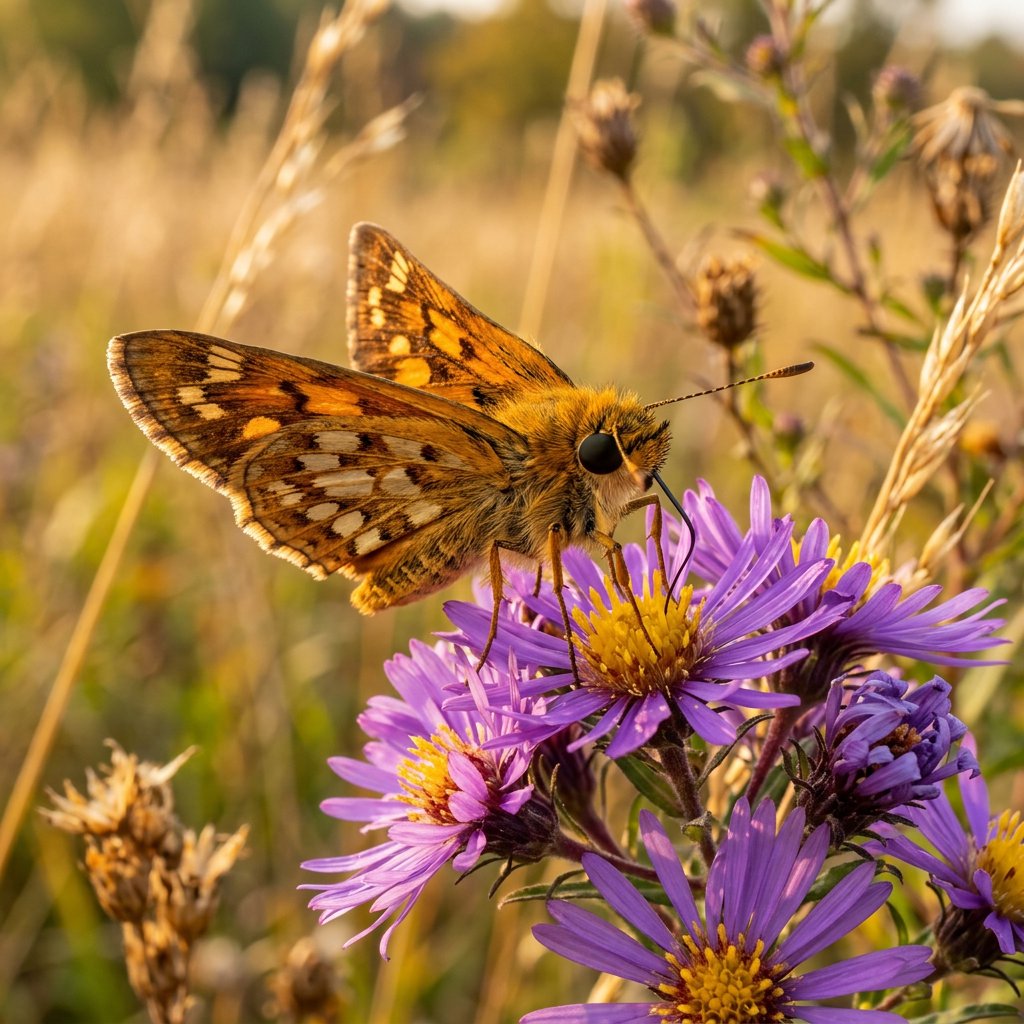
Known as the Leonard’s Skipper, this vibrant insect is a late-summer herald that brings a splash of rusty orange to North American meadows. Its fast, erratic flight gives it the "skipper" name, making it a delightful challenge for nature lovers to spot as it zips between wildflowers. While many butterflies begin to fade as autumn approaches, the Leonard’s Skipper is just getting its second wind.
🔍 How to Identify
- 🦋 Wing Coloration: The upper wings are a rich tawny-orange, heavily bordered by dark, smoky brown. Males often have a distinct dark "stigma" or scent patch on their forewings.
- ✨ Under-Wing Pattern: The underside of the hindwing is a deep reddish-rust color, decorated with a very prominent, curved row of creamy-white or pale yellow spots.
- ✈️ Body Shape: Like most skippers, it has a thick, moth-like body with large eyes and hooked antennae, giving it a sturdy, "stocky" appearance compared to delicate swallowtails.
🌲 Habitat & Ecology
- 🌾 The Grass Connection: This skipper is a specialist of the prairie. Its caterpillars rely almost entirely on native bunchgrasses, particularly Little Bluestem, where they build small silk-lined shelters at the base of the plant.
- 🌸 Late-Season Nectar: You’ll most likely find adults perched on purple or yellow late-blooming flowers. They are particularly fond of Blazing Stars (Liatris), Asters, and Goldenrods, providing vital pollination services just before the frost hits.
- 🍂 Seasonal Timing: They are strictly "univoltine" in the north, meaning they have only one generation per year, typically emerging in late August or September.
⚠️ Safety & Toxicity
- ✅ Harmless Friend: Leonard’s Skipper is completely safe. It possesses no stingers or biting mouthparts and is not toxic if accidentally touched.
- 🛡️ Ecosystem Sensitivity: These insects are sensitive to habitat loss. To keep them safe, avoid using broad-spectrum pesticides in your garden and try to preserve native grass patches where their larvae can overwinter.
✨ Fun Fact
Leonard's Skipper caterpillars are tiny survivalists; after hatching in the fall, the first-stage larvae don't eat at all. Instead, they immediately go into hibernation (diapause) and wait for the following spring to take their very first bite of grass!
More Details








