Info
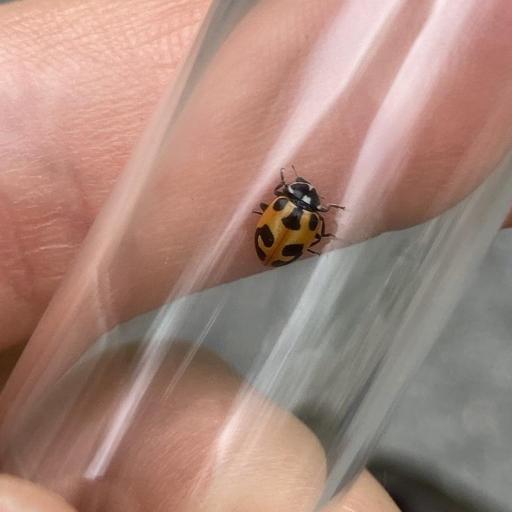
Often called the Parenthesis Lady Beetle, this tiny insect is a gardener’s secret weapon. Named for the distinct black markings on its wing covers that look like a set of punctuation marks, it is a native North American guardian that spends its life hunting down garden pests. Unlike some of its more aggressive cousins, this beetle is a quiet, hardworking neighbor that keeps your plants healthy and aphid-free.
🔍 How to Identify
- 💬 The "Parentheses": Look at the rear of the wing covers (elytra); you will see two black, curved marks that resemble a set of brackets
( ). - 🐞 Body Shape: They are smaller and more oval-shaped than the common round ladybug, usually measuring only 4 to 5 millimeters.
- 🎭 The Mask: The pronotum (the area behind the head) is black with a creamy-white border, often featuring two small white spots that look like tiny eyes or "spectacles."
🌲 Habitat & Ecology
- 🍽️ The Aphid Hunter: These beetles are voracious predators. Both the larvae and the adults specialize in eating aphids, mites, and scale insects, making them essential for natural pest control.
- 🌾 Home Ground: You will most likely spot them in open fields, meadows, and suburban gardens. They prefer low-growing vegetation and are often found patrolling the undersides of leaves where pests hide.
⚠️ Safety & Toxicity
- ✅ Friend or Foe?: This is a definite "Friend." They are non-invasive and highly beneficial to the environment.
- 🩹 Bites and Stings: They do not sting. While they can technically give a tiny "nip" with their mandibles if handled roughly, it is harmless and rarely breaks the skin.
- 🟡 Reflex Bleeding: If they feel threatened, they may leak a foul-smelling yellow fluid from their leg joints. This is a defense mechanism to ward off birds; it might stain your skin or clothes, but it isn't toxic.
✨ Fun Fact
Parenthesis Lady Beetles are "early risers" of the insect world. They are often among the very first ladybug species to emerge from hibernation in the spring, waking up just as the first aphids begin to appear on new plant growth!
More Details








