Info
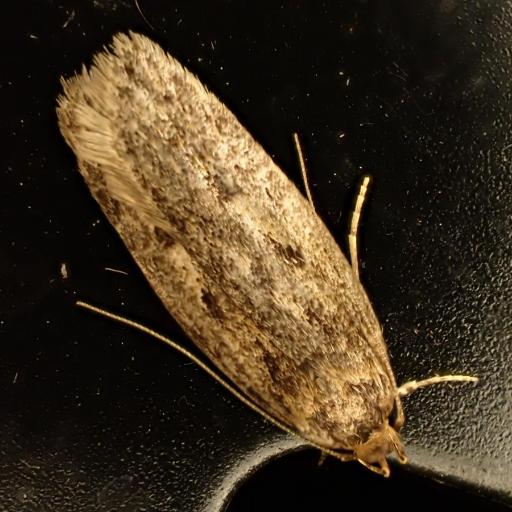
Commonly known as the Brown House Moth, this subtle scavenger is a frequent (and often uninvited) guest in homes across the globe. While it lacks the flashy colors of a butterfly, its incredible ability to survive on almost anything—from old carpet fibers to bird nests—makes it an evolutionary master of the domestic environment.
🔍 How to Identify
- 🟤 Mottled Wings: The forewings are a bronzy-brown color, typically marked with three or four distinct dark spots that help it blend into wood and shadows.
- 📏 Resting Posture: When at rest, it holds its wings flat over its back rather than out to the sides, giving it a narrow, sleek, torpedo-like silhouette.
- 🐛 Larval Appearance: The caterpillars are off-white with a distinct tan or reddish-brown head; they are often found tucked away in small silken tubes they spin for protection.
🌲 Habitat & Ecology
- 🏚️ The Ultimate Scavenger: This moth thrives in damp corners of houses, warehouses, and outbuildings. In the wild, they are often found in bird nests or tree hollows where organic debris accumulates.
- 🍽️ A Varied Diet: The larvae are notorious for eating animal-based materials like wool, leather, and feathers, but they are also known to munch on dried fruit, cereal, and even old bookbindings.
- 💧 Moisture Seeker: They are highly dependent on humidity. You will rarely find them in very dry, well-ventilated rooms, as they prefer the stagnant, moist air of basements or neglected cupboards.
⚠️ Safety & Toxicity
- 🛡️ Harmless to Humans: The Brown House Moth does not bite, sting, or carry diseases. It is considered a "nuisance pest" rather than a physical threat to people or pets.
- 🧶 Risk to Property: The primary "danger" is to your belongings. The larvae can cause significant damage to expensive wool rugs, silk clothing, and stored dry goods. Keeping your storage areas dry and vacuumed is the best way to keep them at bay.
✨ Fun Fact
The Brown House Moth is a bit of a biological "time traveler." If the environment becomes too cold or the food source runs out, the larvae can enter a state of diapause—a biological pause—waiting for months or even years until conditions improve before they finish growing!
More Details








