Info
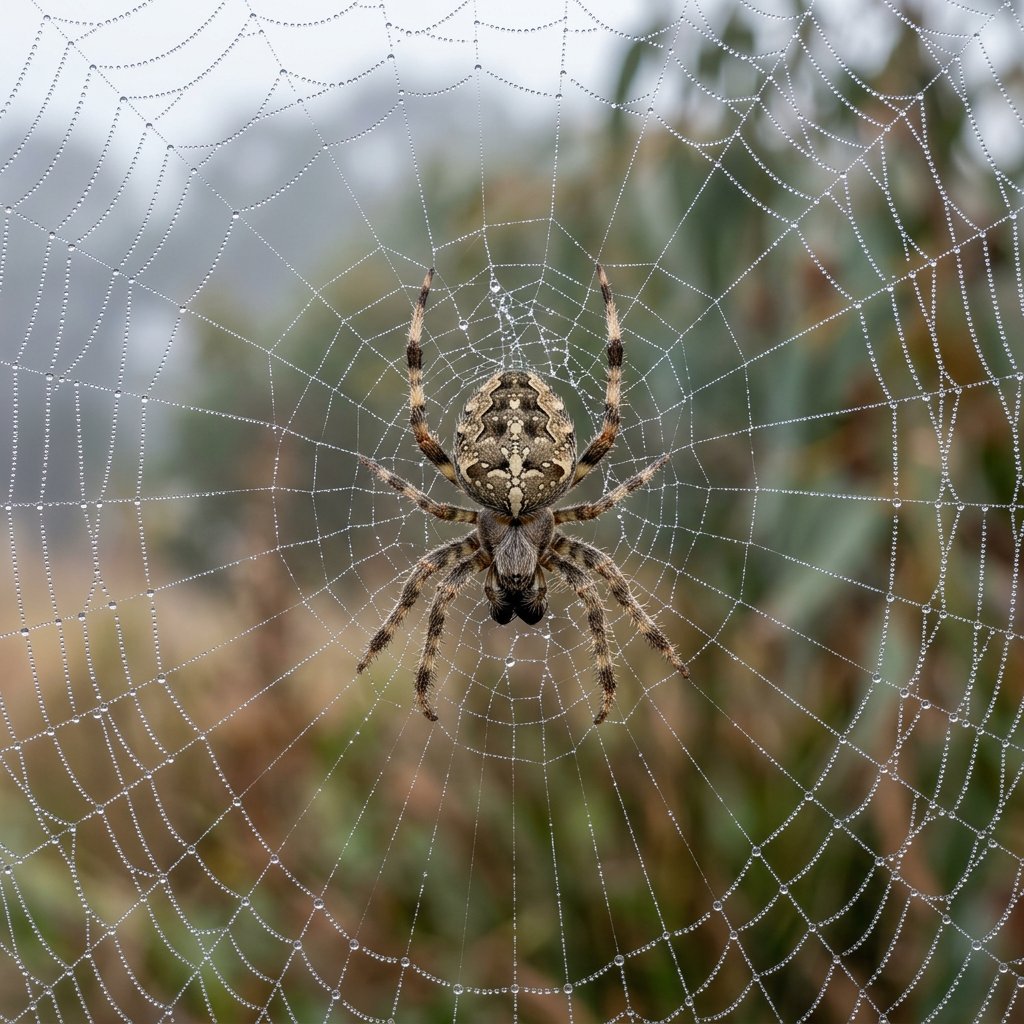
Often called the Australian Garden Orb-weaver, Hortophora transmarina is the master architect of the backyard night shift. If you’ve ever walked into a sticky, invisible "face-mask" of silk at twilight, you’ve likely met one of these industrious weavers. They are iconic symbols of the Australian summer, acting as natural pest control while remaining hidden during the heat of the day.
🔍 How to Identify
- 🕷️ The Abdomen: It is large, bulbous, and roughly triangular or teardrop-shaped. It often features two small humps near the front and a darker, leaf-like pattern on the back.
- 🎨 Variable Camouflage: Their color is highly adaptable, ranging from creamy grey and reddish-brown to dark charcoal, helping them blend perfectly against tree bark or fence posts.
- 🦵 Hairy Legs: The legs are stout and covered in fine, sensitive hairs used to detect the tiniest vibrations of struggling prey in their webs.
🌲 Habitat & Ecology
- 🕸️ The Nightly Ritual: These spiders are strictly nocturnal. They spend their nights hanging upside down at the center of a large, circular "orb" web and retreat to nearby foliage or under house gutters during the day to avoid birds.
- 🦗 Natural Pest Control: As opportunistic predators, they catch a wide variety of flying insects, including moths, flies, and mosquitoes. They are a "friend" to gardeners, keeping insect populations in check without chemicals.
⚠️ Safety & Toxicity
- 🛡️ Non-Aggressive: While their size can be intimidating, Garden Orb-weavers are very reluctant to bite. They prefer to drop to the ground or scuttle away when disturbed.
- 🩹 Mild Venom: Their venom is not considered medically significant for humans. A bite may cause local pain, redness, or mild swelling, similar to a bee sting, but is not life-threatening.
- 🐾 Pet Safety: They are generally harmless to cats and dogs. A curious pet might get a minor nip if they corner the spider, but it rarely requires a trip to the vet.
✨ Fun Fact
- ♻️ Silk Recycling: To save energy and nutrients, the Garden Orb-weaver often eats its own web at dawn. By consuming the silk, it recycles the complex proteins to produce a brand-new, sticky trap the following evening!
More Details








