Info
Meet North America’s true "gentle giant," the Cecropia Silkmoth. Often mistaken for a small bird or a stray tropical butterfly, this moth is the largest native moth on the continent. With a wingspan that can reach nearly seven inches, seeing one at rest is a rare and breathtaking encounter for any nature lover.
🔍 How to Identify
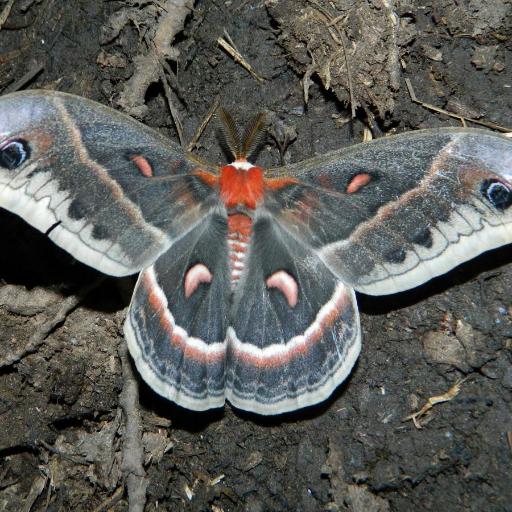
- 🦋 Wingspan: Massive reddish-brown wings featuring distinct white, crescent-shaped spots (lunules) bordered with red and black.
- 🔴 The Body: A strikingly thick, fuzzy abdomen striped with bold red and white bands, making it look like it’s wearing a tiny sweater.
- 🪶 Antennae: Large, feathery antennae that are especially "plush" in males, used to "smell" female pheromones from miles away.
🌲 Habitat & Ecology
- 🌳 The Host Plants: While the adults don't eat, the caterpillars are hungry guests on various trees. They are frequently found on Maple, Birch, Apple, and Wild Cherry trees in suburban backyards and forest edges.
- 🌑 Nocturnal Visitors: These moths are strictly creatures of the night. They emerge from their large, brownish silk cocoons (often attached to twigs) in early summer to find a mate before the sun comes up.
- 🐛 The "Dragon" Larva: Before its transformation, the Cecropia is a huge, neon-green caterpillar adorned with colorful blue, yellow, and red knobs (tubercles) that look like tiny alien sensors.
⚠️ Safety & Toxicity
- ✅ Status: Completely harmless and friendly to humans.
- 👐 Details: Despite their intimidating size, they have no stingers and cannot bite. In fact, adult Cecropia moths lack mouthparts entirely! They are safe for children to observe and do not pose any threat to pets.
✨ Fun Fact
⏳ A Race Against Time: Because they lack a digestive system, adult Cecropia moths cannot eat. They live for only 7 to 14 days, surviving entirely on energy stored from their time as a caterpillar. Their entire adult life is a dedicated, fleeting mission to find a mate.
More Details








