Info
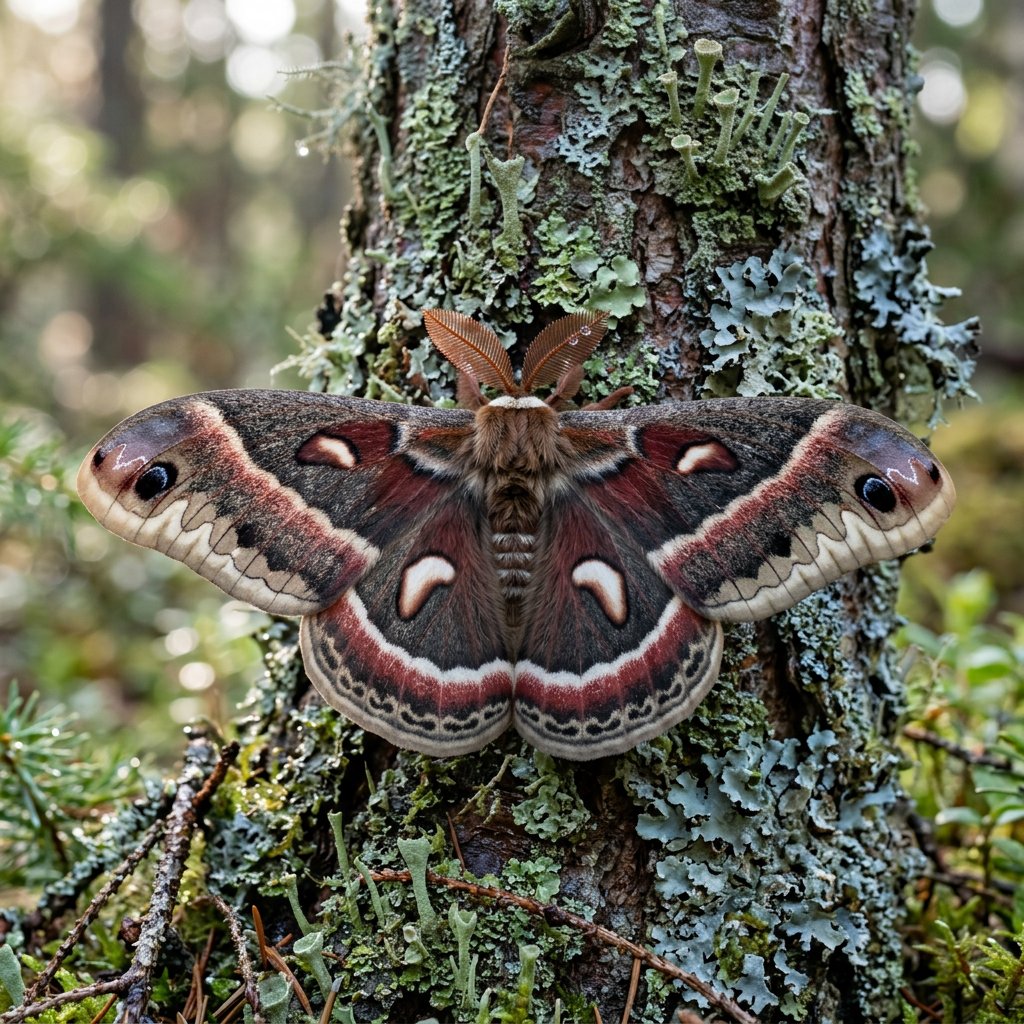
The Columbia Silkmoth is the elusive "ghost of the northern bogs." Often mistaken for its more famous cousin, the Cecropia moth, this majestic insect is a specialist of the cold, damp forests of North America. It is a true gentle giant of the night, spending its brief adult life fluttering through the shadows of tamarack trees in search of a mate.
🔍 How to Identify
- 🦋 The Wings: Deep mahogany or charcoal-brown wings with striking white, crescent-shaped "windows" (discal spots) in the center. Unlike the Cecropia moth, the Columbia lacks a distinct red band on the outer side of its white wing lines.
- 📡 The Antennae: Large, feathery, bipectinate antennae that act like high-tech radar for picking up scents in the dark.
- 🐛 The Caterpillar: A vibrant lime-green body adorned with colorful "knobs" or tubercles—usually red or yellow on the top and blue on the sides.
- 📏 The Size: While smaller than some other giant silkmoths, it still boasts an impressive wingspan of 3 to 4 inches.
🌲 Habitat & Ecology
- 🌲 The Larch Connection: This moth is a picky eater in its youth. The caterpillars feed almost exclusively on the needles of the Larch (Tamarack) tree, making them residents of acidic bogs and northern coniferous forests.
- 🌙 A Short, Sweet Life: As adults, Columbia Silkmoths lack functioning mouthparts. They cannot eat or drink; their only mission is to find a partner and reproduce before their energy reserves run out, usually within a week.
- 💡 Nocturnal Navigator: They are strictly nocturnal. While they are sometimes drawn to porch lights, they prefer the deep isolation of the wetlands.
⚠️ Safety & Toxicity
- ✅ Harmless Friend: The Columbia Silkmoth is completely safe. They do not bite, sting, or carry any toxins that are harmful to humans or pets.
- 🧤 Handle with Care: If you find one, it is best to observe without touching. Their wings are covered in tiny scales that are easily damaged, which can hinder their ability to fly and escape predators.
- 🐛 Non-Stinging Larvae: Despite the "scary" colorful knobs on the caterpillars, they do not have stinging hairs or venom.
✨ Fun Fact
The male Columbia Silkmoth has such a powerful sense of smell that he can detect the pheromones of a female from several miles away, navigating through dense forest in total darkness to find her.
More Details








