Info
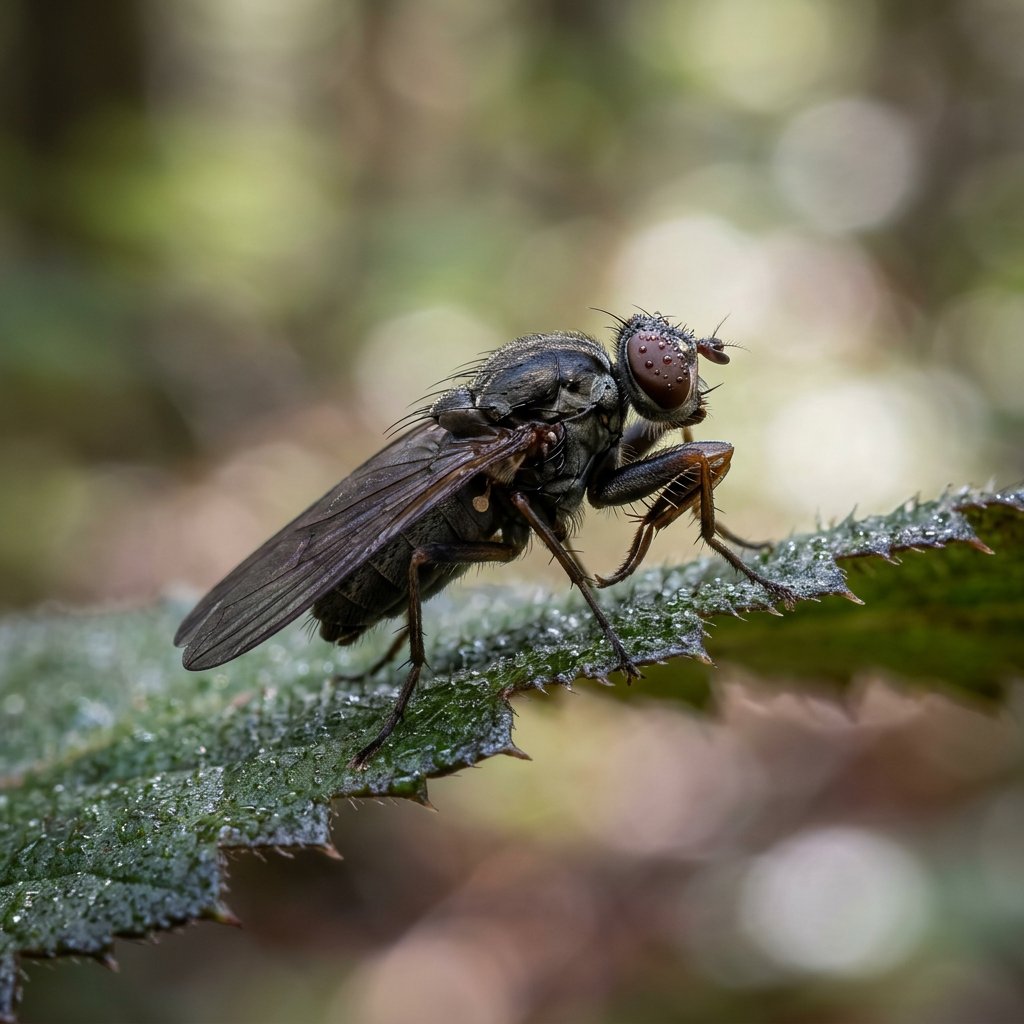
Often overlooked because of their tiny size, flies in the genus Hybos—commonly known as "Thick-legged Flies"—are the pint-sized action heroes of the insect world. With their noticeably hunched backs and comically muscular back legs, they look like they’ve never missed a "leg day" at the gym. These active little predators are a gardener's secret ally, tirelessly patrolling leaves to snatch up even smaller pests.
🔍 How to Identify
- 🦵 The "Power Thighs": The most striking feature is the greatly thickened, swollen hind femurs (thighs), which are often lined with tiny spines to help them grip struggling prey.
- 🐪 The Hunchback Profile: They possess a remarkably high, rounded thorax, giving them a distinct "humped" or hunched appearance when viewed from the side.
- 🕶️ The Jet-Black Look: Most species are small (about 3-5mm) and shiny, with colors ranging from deep charcoal to an oily, metallic black, making them look like tiny, armored drones.
🌲 Habitat & Ecology
- 🍴 The Aerial Ambush: Unlike many flies that scavenge on waste, Hybos are dedicated hunters. They sit motionless on leaves, watching for smaller flies or midges, then launch into a lightning-fast aerial strike to grab their meal.
- 🌿 Leaf-Top Lurkers: You’ll typically find them in shaded, damp areas of the garden, meadows, or woodland edges. They prefer to sit on the upper surface of broad leaves, such as Ivy or Hostas, where they have a clear view of their "airspace."
⚠️ Safety & Toxicity
- ✅ Harmless Observer: Despite their predatory nature toward other bugs, Hybos flies are entirely harmless to humans and pets. They do not have the mouthparts to bite humans, nor do they possess a stinger.
- 🛡️ Garden Protector: Because they prey on gnats, midges, and other small nuisance flies, they are considered a "beneficial insect." Having them in your yard is a sign of a healthy, functioning micro-ecosystem.
✨ Fun Fact
While they belong to the "Dance Fly" family (Hybotidae), Hybos species are less about the dance and more about the "grab." Their hind legs are so powerful that they can snatch prey right out of the air and hold them in a vice-like grip while they feed on the move!
More Details








