Info
Often referred to as the Old House Borer, this beetle is a master of disguise and a source of dread for homeowners. Despite its name, it actually prefers "new" wood (typically under 10 years old) where the resin content is still high. It is a stealthy tenant, often living inside structural timbers for years as a larva before ever showing its face as an adult.
🔍 How to Identify
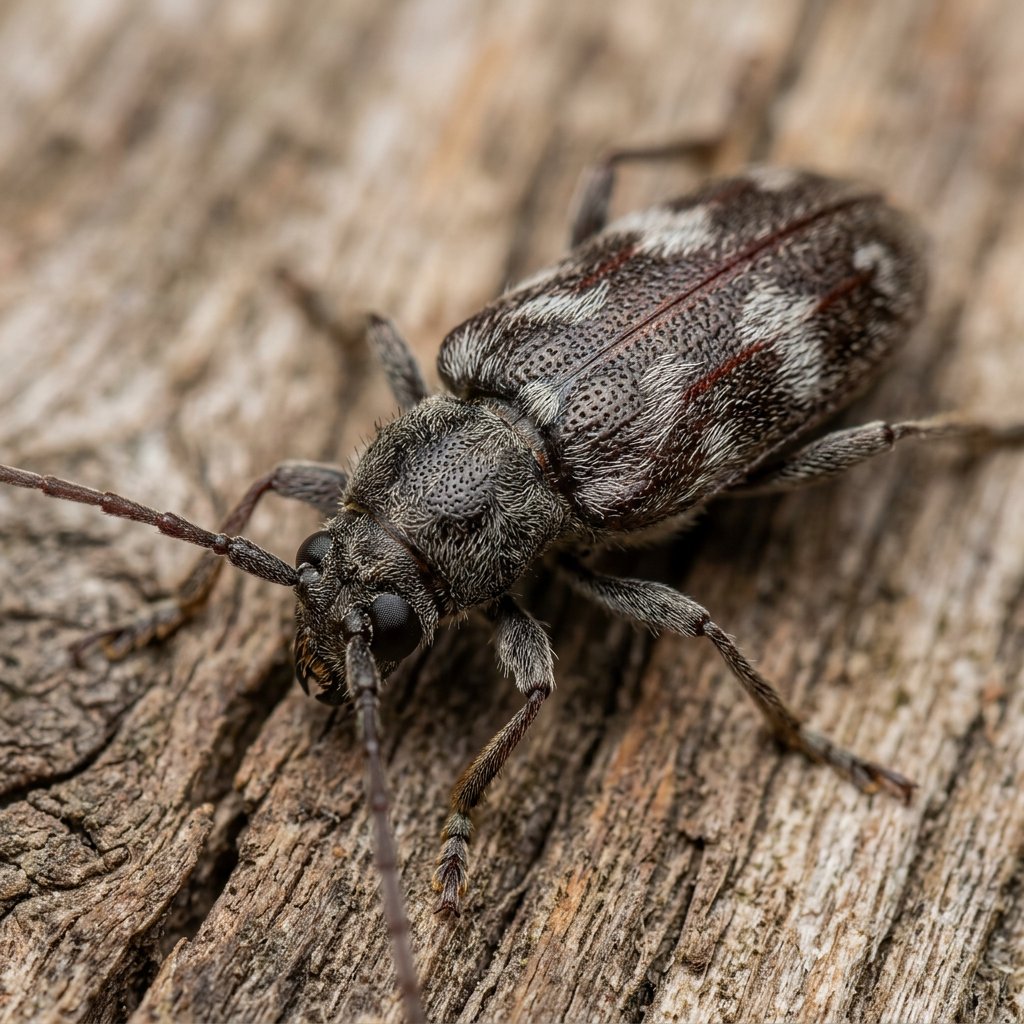
- 🪲 The Body: A slightly flattened, elongated beetle ranging from 8 to 25 mm in length. Its color is typically brownish-black to grey.
- 👀 The "False Eyes": The segment behind the head (the prothorax) features two distinct, shiny black bumps that look like a pair of polished eyes staring back at you.
- 🤍 Fuzzy Patches: The hardened wing covers (elytra) are often marked with two irregular, grayish-white bands made of tiny, fine hairs.
🌲 Habitat & Ecology
- 🪵 Timber Specialist: Unlike many wood-boring insects that need damp or rotting logs, the Old House Borer thrives in dry, seasoned softwood like Pine, Fir, and Spruce. It is most commonly found in attic joists, floorboards, and window frames.
- 👂 The Sound of Silence: You are more likely to hear this insect than see it. The larvae are famous for making a rhythmic "clicking" or rasping sound as they chew through the wood fibers, which can sometimes be heard on quiet nights.
⚠️ Safety & Toxicity
- 🛡️ Human Safety: These beetles are completely harmless to humans and pets. They do not bite, sting, or carry diseases; they are strictly interested in the cellulose in your walls.
- 🏠 Property Threat: While they aren't "toxic," they are a major structural pest. Because the larvae can feed for 3 to 10 years before emerging, they can cause significant internal damage to a home's skeleton before a single exit hole is ever spotted.
✨ Fun Fact
The Old House Borer larva is a slow eater with a long life. Depending on the temperature and the nutritional value of the wood, it can stay in its "teenage" larval stage for up to 15 years before finally becoming an adult!
More Details








