Info
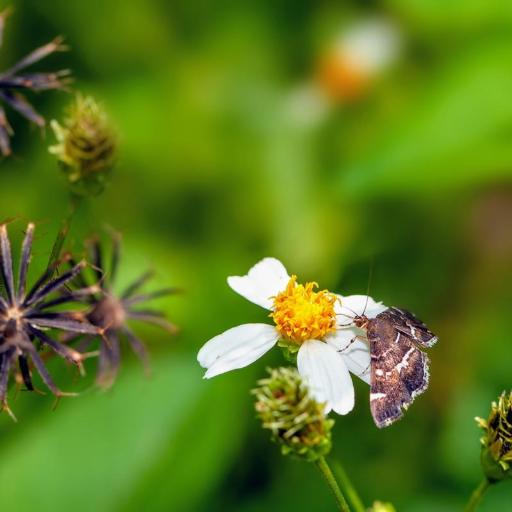
The Spotted Beet Webworm Moth (Hymenia perspectalis) is a delicate, "stained-glass" moth that gardeners often encounter fluttering near their leafy greens. While the adult is a graceful flier with an intricate pattern, its larvae are notorious for creating tiny silken hideouts among your spinach and beets. It is a widespread traveler, acting as a tiny bridge between the wild meadow and the backyard vegetable patch.
🔍 How to Identify
- 🦋 The "Windowpane" Wings: The most striking feature is its deep chocolate-brown wings, interrupted by two distinct, wavy white bands that look almost like translucent, shimmering windows.
- 📐 Triangular Silhouette: When resting on a leaf, it holds its wings in a neat, flat triangle. If you look closely at the edges, you'll see a fine, white-fringed border.
- 🐛 The Webworm Larvae: Look for small, translucent green caterpillars. They are often found tucked inside leaves that have been folded over or "sewed" together with fine, sticky silk.
🌲 Habitat & Ecology
- 🥬 The Garden Feast: As its name suggests, this moth is a specialist of the Amaranth family. You’ll likely find them dancing around your Swiss chard, beets, spinach, and even common garden weeds like pigweed.
- ☀️ Semi-Diurnal Habits: Unlike many moths that hide until total darkness, the Spotted Beet Webworm is easily "flushed out" during the day. They will flutter short distances with a erratic zigzag flight if you walk through tall grass or garden beds.
⚠️ Safety & Toxicity
- 🛡️ Harmless to Humans: These moths do not bite, sting, or carry any toxins. They are perfectly safe to observe up close or even gently relocate by hand.
- 🪴 A Threat to the Harvest: While they won't hurt you or your pets, they are considered "foes" to the vegetable gardener. The caterpillars can "skeletonize" leaves—eating the soft tissue and leaving only the veins—which can stunt the growth of young plants.
✨ Fun Fact
✨ Tropical Travelers: These moths are essentially tropical spirits. Because they cannot survive harsh, freezing winters, they migrate northward every single year from warmer climates to recolonize gardens across North America as the weather warms!
More Details








