Info
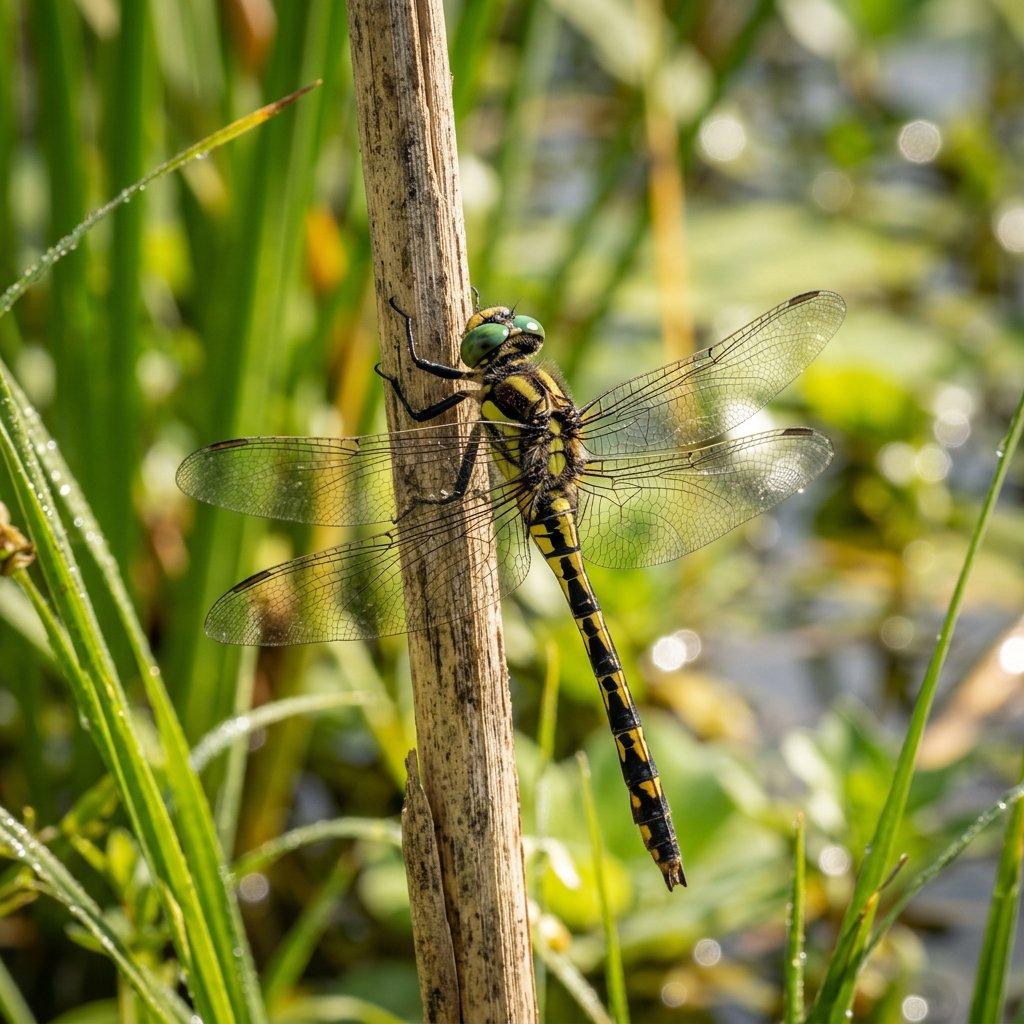
Often called the Australian Tiger, this striking dragonfly is a master of the skies and a common sight near waterways across Australia. Its bold yellow and black stripes aren't just for show—they serve as excellent camouflage in the dappled light of riverbanks. Despite its fierce name and prehistoric appearance, it is a beneficial "friend" to humans, acting as a natural pest controller.
🔍 How to Identify
- 🎨 The "Tiger" Pattern: Bold, alternating bands of bright yellow or lime-green and deep black or dark brown run the length of its body.
- 📉 The Clubbed Tail: A key feature of its family; the end of the abdomen flares out significantly, resembling a club or a paddle.
- 👁️ Separated Eyes: Unlike many common dragonflies whose eyes touch at the top of the head, the Australian Tiger’s eyes are widely spaced, giving it a distinct, "hammerhead" look.
🌲 Habitat & Ecology
- 💧 Waterfront Patrol: They are most commonly found guarding the perimeters of slow-moving rivers, lagoons, and lakes. They are highly territorial and will chase away other insects that enter their "airspace."
- 🦟 Aerial Assassin: These insects are high-speed predators. They spend much of their time perched on a sunlit twig, launching into the air to snag mosquitoes, midges, and flies mid-flight before returning to their perch to eat.
⚠️ Safety & Toxicity
- 🛡️ Harmless to Humans: The Australian Tiger is completely non-venomous and does not possess a stinger. It is a peaceful neighbor that poses no threat to people or pets.
- 🤏 Pinch Warning: If handled roughly or caught by hand, a large adult may attempt to nip with its mandibles. The "bite" is a mechanical pinch and is not dangerous, but it is best to observe these beautiful flyers from a short distance.
✨ Fun Fact
- 🦖 Ancient Lineage: Dragonflies like the Australian Tiger belong to an ancient group of insects that haven't changed much in millions of years—their ancestors were buzzing around the Earth long before the first dinosaurs ever appeared!
More Details








