Info
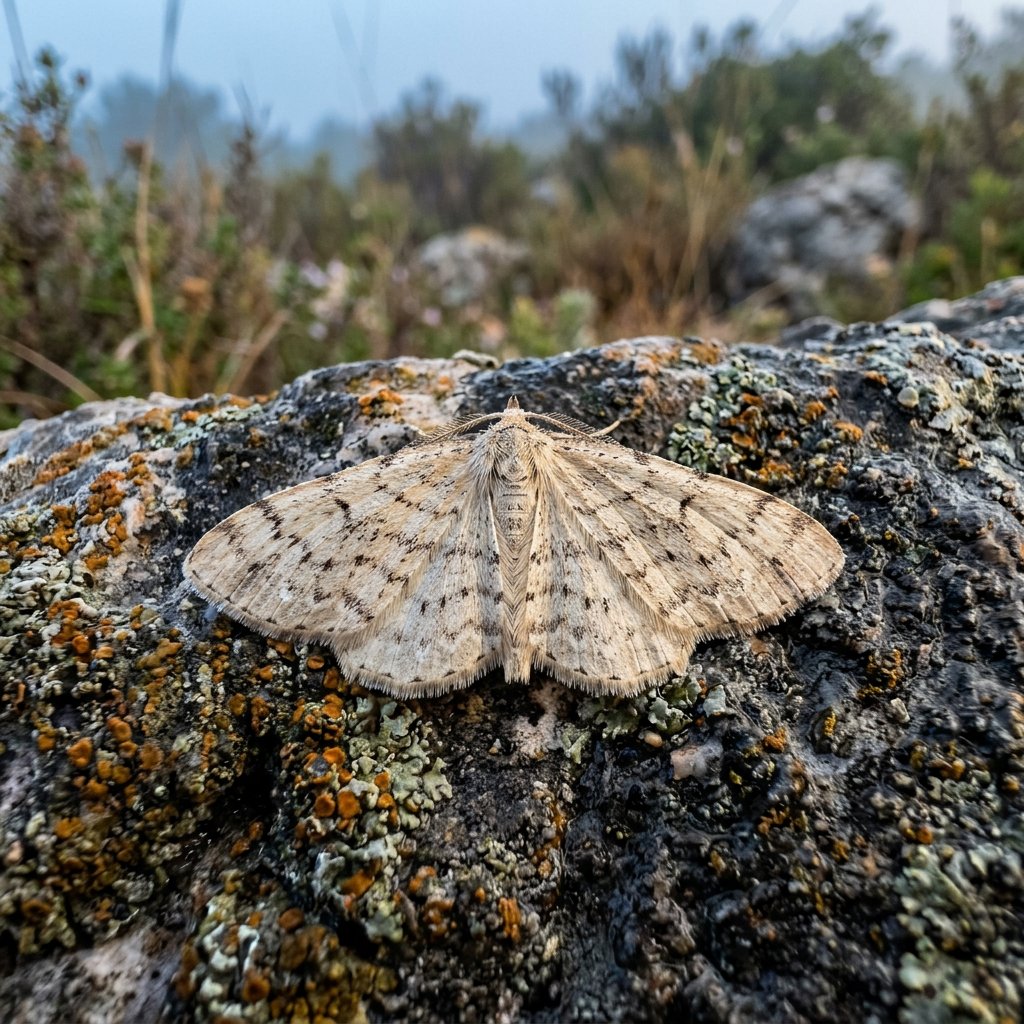
Often called the Small Dusty Wave, this delicate moth is a master of urban camouflage. Unlike many of its flashy, colorful cousins, this moth prefers to blend in with stone walls, garden sheds, and old masonry. It is a quiet, frequent visitor to suburban gardens across Europe and parts of North Africa, often found resting motionless during the heat of the day.
🔍 How to Identify
- 🎨 Dusty Texture: Its wings are a pale, creamy grey or off-white, heavily "dusted" with tiny dark scales that give it a grainy, speckled appearance.
- 〰️ Wavy Lines: Look for several faint, dark, wavy lines crossing both the forewings and hindwings, which help break up its silhouette against rough surfaces.
- 📐 Flat Resting Pose: Unlike butterflies, it rests with its wings spread completely flat against a surface, forming a neat, wide triangle shape to minimize shadows.
🌲 Habitat & Ecology
- 🍂 The Debris Eater: As a caterpillar, the Small Dusty Wave isn't a picky eater. It primarily feeds on withered or decaying leaves, ivy, and general plant detritus found at the base of walls or in garden corners.
- 🧱 Urban Dweller: This insect has a peculiar fondness for man-made structures. You are much more likely to find it clinging to a brick wall or a windowsill than deep in a forest, earning it a reputation as a "domestic" moth.
- 🌙 Night Flyer: While it is easily disturbed and seen during the day, it is most active at night, frequently drawn to porch lights or glowing windows.
⚠️ Safety & Toxicity
- 🛡️ Status: Completely Harmless.
- 🏠 Home Friendly: This moth is a "neutral" visitor. Unlike the Common Clothes Moth, the Small Dusty Wave does not eat fabrics, wool, or pantry staples. It poses no threat to your wardrobe, your pets, or your houseplants.
✨ Fun Fact
The caterpillars of this species are known as "inchworms" or "loopers." Because they lack legs in the middle of their bodies, they move by anchoring their front legs and pulling their rear end forward, forming a high "loop" before stretching back out—effectively "measuring" the earth as they go!
More Details








