Info
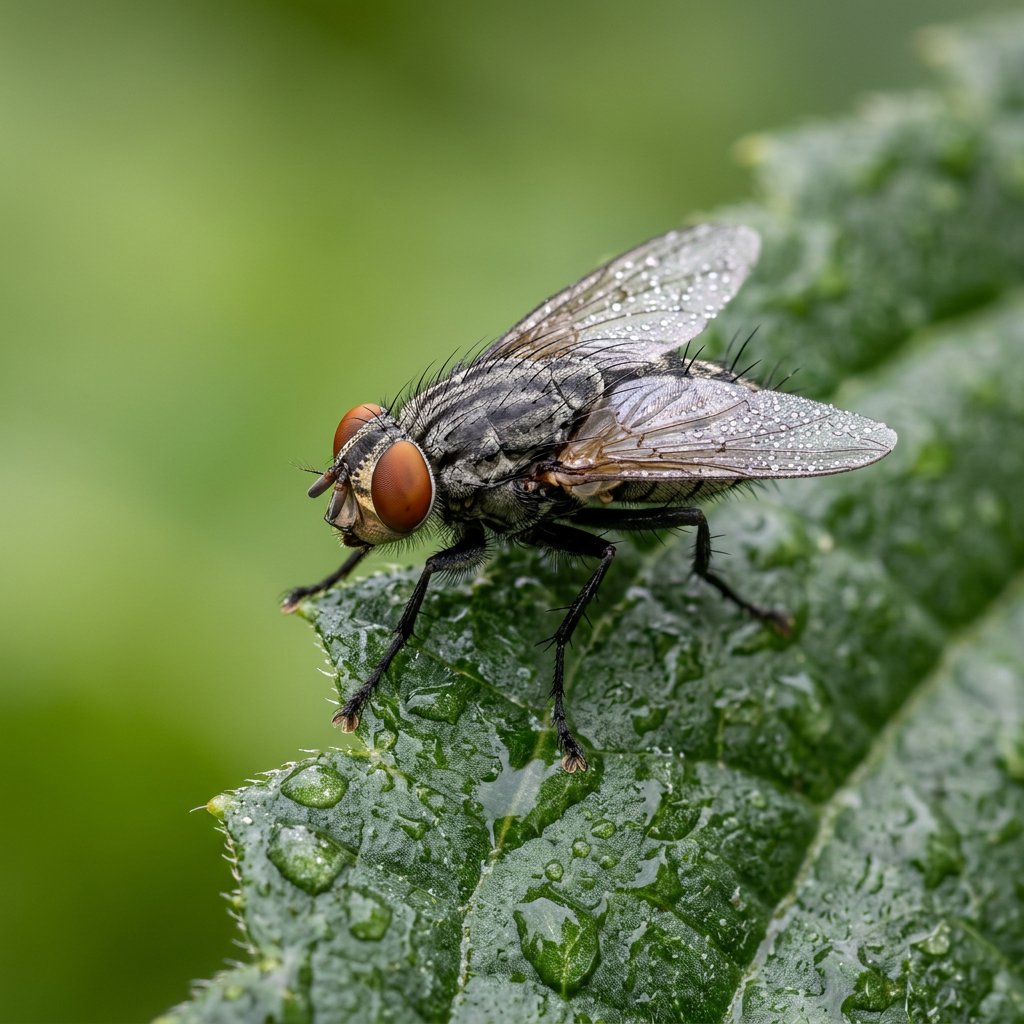
Known as the Winsome Fly, this unassuming insect is the secret weapon of many organic gardeners. It is a highly specialized "parasitoid" fly that was intentionally introduced to North America to act as a biological control against the destructive Japanese beetle. While it may look like an ordinary housefly at first glance, it is a dedicated tiny assassin that helps save your roses and hibiscuses from being skeletonized.
🔍 How to Identify
- 🪰 Bristly Body: It resembles a common housefly but is slightly smaller (about 5-7mm) with a more robust, "hairy" appearance due to stiff black bristles covering its gray and black abdomen.
- 👀 Large Eyes: It possesses prominent, dark reddish-brown compound eyes that take up most of its head, giving it excellent vision for tracking moving targets.
- 🥚 The "White Dot" Sign: You are most likely to spot this fly’s work rather than the fly itself. Look for small, oval, white eggs firmly glued to the thorax (the "neck" area) of Japanese beetles.
🌲 Habitat & Ecology
- 🌿 Gardener's Ally: These flies are found wherever Japanese beetles congregate—typically in sun-drenched gardens, orchards, and agricultural fields during mid-summer.
- 🎯 Biological Timing: The Winsome Fly has evolved to emerge from the soil at the exact moment Japanese beetles begin to hatch. This synchronization ensures the flies have plenty of hosts to provide a home for their offspring.
- 🐝 Nectar Feeder: As adults, they are peaceful pollinators that sip nectar from flowers and "honeydew" secreted by aphids; they only become aggressive when it is time to lay eggs on a beetle.
⚠️ Safety & Toxicity
- 🛡️ Completely Harmless: The Winsome Fly is a "friend" to humans. It does not possess a stinger, it does not bite, and it is not attracted to human food or waste like common filth flies.
- 🐾 Pet Safe: They pose no threat to dogs, cats, or livestock. They are highly host-specific, meaning they are only interested in certain beetles and will not bother other beneficial garden insects like honeybees or butterflies.
✨ Fun Fact
A Japanese beetle "tagged" by a Winsome Fly is a goner! Once the fly glues its egg to the beetle’s back, the larva hatches and bores directly into the beetle's body. The beetle quickly loses its appetite and crawls into the soil to die, effectively stopping the pest from laying its own eggs.
More Details








