Info
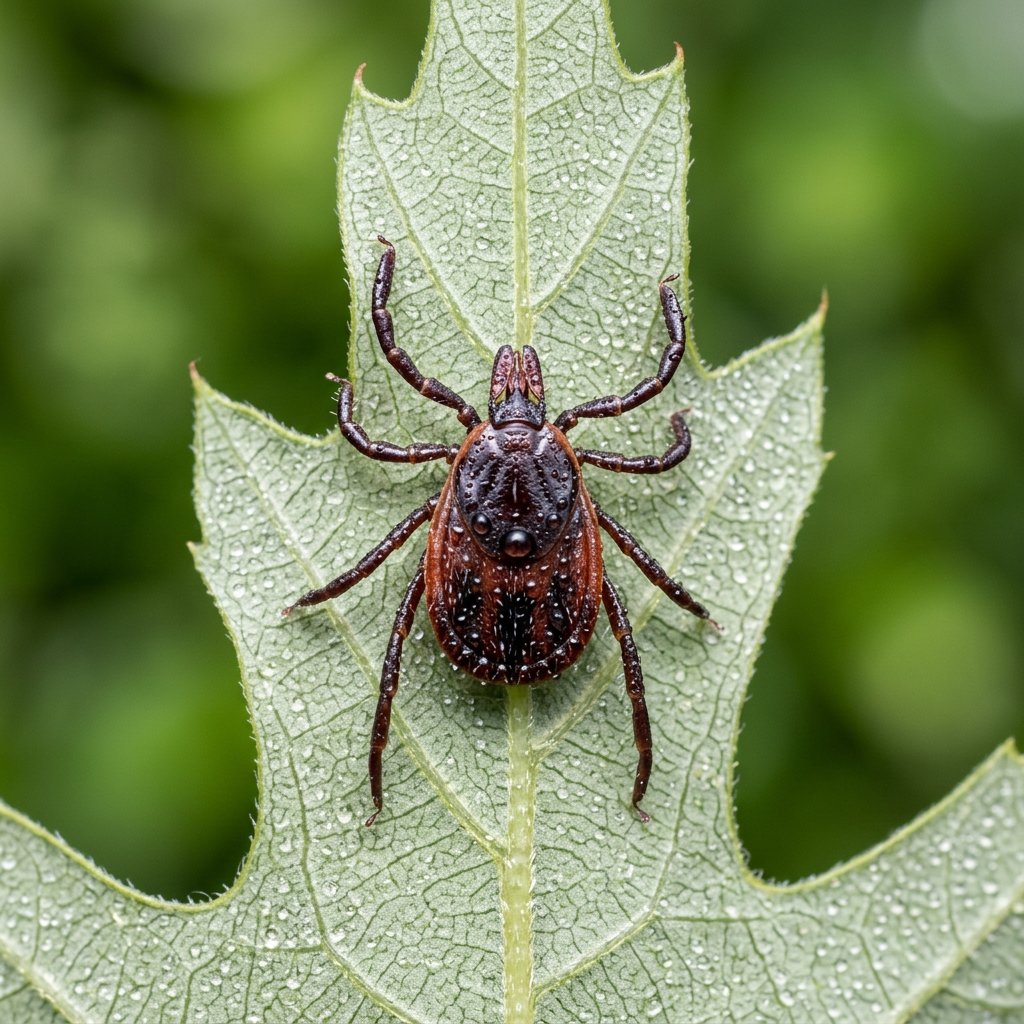
Though the name might sound like a botanical specimen, Ixodes scapularis is actually a member of the arachnid family. Commonly known as the Black-legged Tick or Deer Tick, this tiny hitchhiker is a master of the "sit and wait" game. While it doesn't have the beauty of a flower, it is a significant player in the woodland ecosystems of North America, known primarily for its role in the life cycles of forest mammals.
🔍 How to Identify
- 🕷️ The Tear-drop Shape: They have flat, oval bodies that resemble a small seed. When unfed, they are quite thin, but they can swell significantly after a meal.
- 🌑 The Scutum (Shield): Look for a dark, brownish-black shield-like structure on the back, just behind the head. In females, this shield only covers a portion of their reddish-orange abdomen.
- 📏 Miniature Size: In their nymph stage, they are no larger than a poppy seed. Even as adults, they are significantly smaller than the more common American Dog Tick.
🌲 Habitat & Ecology
- 🌿 Questing Behavior: They don't jump or fly. Instead, they perform a behavior called "questing," where they climb to the tips of long grass or low-hanging leaves and stretch out their front legs, waiting to grab onto a passing host.
- 🦌 The Three-Host Cycle: Their life revolves around three different meals. They usually start on small mice or birds as larvae/nymphs and move to larger mammals, like deer or humans, once they reach adulthood.
- 🍂 Moisture Lovers: You’ll rarely find them in the middle of a sunny, dry lawn. They prefer the "edge" habitat—where the woods meet the grass—and thrive in moist leaf litter.
⚠️ Safety & Toxicity
- 🚫 Medical Importance: HIGH RISK. The Black-legged Tick is the primary carrier of Lyme disease, as well as other pathogens like Anaplasmosis and Powassan virus.
- 🩹 Removal Protocol: If found attached, use fine-tipped tweezers to grasp the tick as close to the skin as possible and pull upward with steady, even pressure. Do not use heat or oils, as this can cause the tick to regurgitate fluids into the bite site.
- 🐕 Pet Protection: They are a major threat to dogs and cats. Ensure your pets are on a vet-approved preventative, as ticks are easily missed under thick fur.
✨ Fun Fact
These ticks are true winter warriors. While many insects hibernate or die off, the Black-legged Tick produces a specialized "antifreeze" protein in its blood, allowing it to stay active and looking for a host even when temperatures are just above freezing.
More Details








