Info
Often called the All-oak Gall Wasp, this tiny insect is one of nature’s most clever architects. Rather than building a nest out of paper or mud, it hijacks the DNA of an oak tree to grow a "nursery" made of plant tissue. While the wasp itself is rarely seen, the strange, marble-like swellings it leaves behind on twigs have fascinated naturalists for centuries, looking like alien fruits growing where they shouldn't.
🔍 How to Identify
- 🐝 The Wasp: A tiny, inconspicuous dark insect, usually less than 4mm long, looking somewhat like a miniature, hump-backed ant with wings.
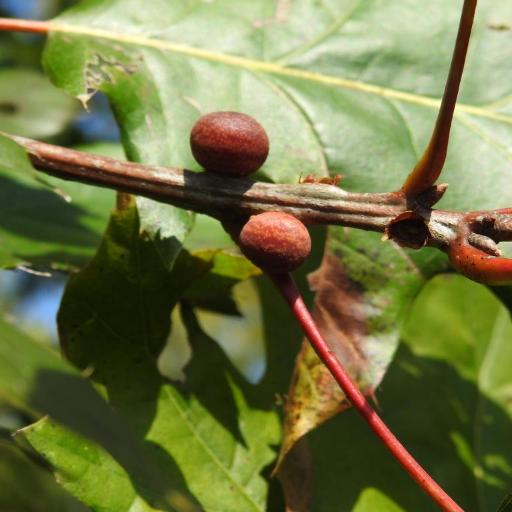
- 🌕 The Gall: The most recognizable feature is a round, woody growth on oak twigs. These "galls" start out fleshy and reddish or green, eventually turning brown and hard like a small nut.
- 🕳️ Exit Holes: Old galls will feature a single, perfectly circular "escape hatch" where the adult wasp chewed its way out after reaching maturity.
🌲 Habitat & Ecology
- 🌳 The Oak Connection: These wasps are highly specialized, primarily targeting the Shingle Oak (Quercus imbricaria) and other members of the red oak family. They rely entirely on the tree's nutrients to survive their larval stage.
- 🧪 Chemical Mimicry: The female wasp injects a specific chemical along with her eggs that mimics the tree's own growth hormones. This tricks the tree into growing a protective, nutrient-rich "house" specifically for the wasp larva.
⚠️ Safety & Toxicity
- 🛡️ Harmless to People: Despite being a "wasp," the Kokkocynips imbricariae cannot sting humans or pets. They lack the venom and aggression of yellowjackets or hornets.
- 🌿 Tree Health: While a heavy infestation might look alarming or cause minor twig "flagging" (yellowing leaves), these wasps are a natural part of the ecosystem and rarely cause permanent damage to a healthy, mature oak tree.
✨ Fun Fact
💡 Ink of History: For over 1,500 years, the tannins harvested from crushed oak galls were the primary ingredient for "Iron Gall Ink." This means that the Magna Carta, the U.S. Constitution, and Leonardo da Vinci’s sketches were all likely written using the help of gall wasps!
More Details








