Info
Often spotted darting through the grass at twilight, the Common Swift is a small but energetic moth with a name that perfectly describes its frantic flight. While the adults are elegant, earthy-toned flyers, their larvae lead a "hidden" life deep underground. To most nature lovers, they are a classic sign of early summer evenings, though gardeners with prized root vegetables might view them with a bit more caution.
🔍 How to Identify
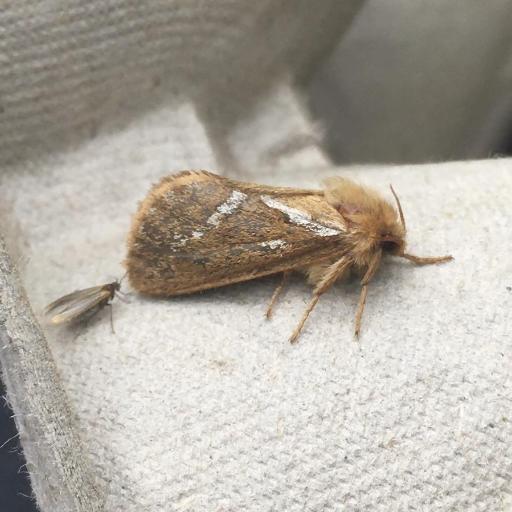
- 🎨 Patterned Wings: Their forewings are usually a warm clay-brown or ochre, decorated with distinctive white, jagged streaks that often form a rough "V" shape.
- 🛌 Resting Posture: When at rest, they fold their wings steeply over their back like a tent, making them look like a small piece of dried bark or a dead leaf.
- 📏 Compact Size: They are relatively small moths, with a wingspan typically ranging between 25mm and 40mm, appearing quite "furry" around the head and thorax.
🌲 Habitat & Ecology
- 🌱 The Subterranean Diet: While the adults do not feed at all, the larvae are generalist "root-munchers." They live in the soil for up to two years, feeding on the roots of grasses, strawberries, lettuce, and many ornamental flowers.
- 🌙 The Dusk Dance: These moths are famous for their "swift" flight. At dusk, males fly rapidly and erratically just above the ground in a pendulous motion to attract females who are resting nearby in the herbage.
- 🏡 Common Residents: You will find them in almost any grassy environment, including overgrown gardens, meadows, and roadside verges throughout Europe and parts of Asia.
⚠️ Safety & Toxicity
- 🦋 Harmless Adult: The adult moth is completely harmless to humans and pets. They lack a functional proboscis (mouthpart), meaning they cannot bite or even drink nectar; they live solely to mate and lay eggs.
- 🌿 Garden Foe: While they don't bite humans, they can be a "foe" to your plants. Because the larvae stay underground, a plant might suddenly wilt because its root system has been compromised by a hungry Swift larva.
✨ Fun Fact
The Common Swift belongs to a family of moths (Hepialidae) that is considered one of the most primitive lineages of moths still alive today. They are essentially "living fossils" that have been flying over grasslands in much the same way for millions of years!
More Details








