Info
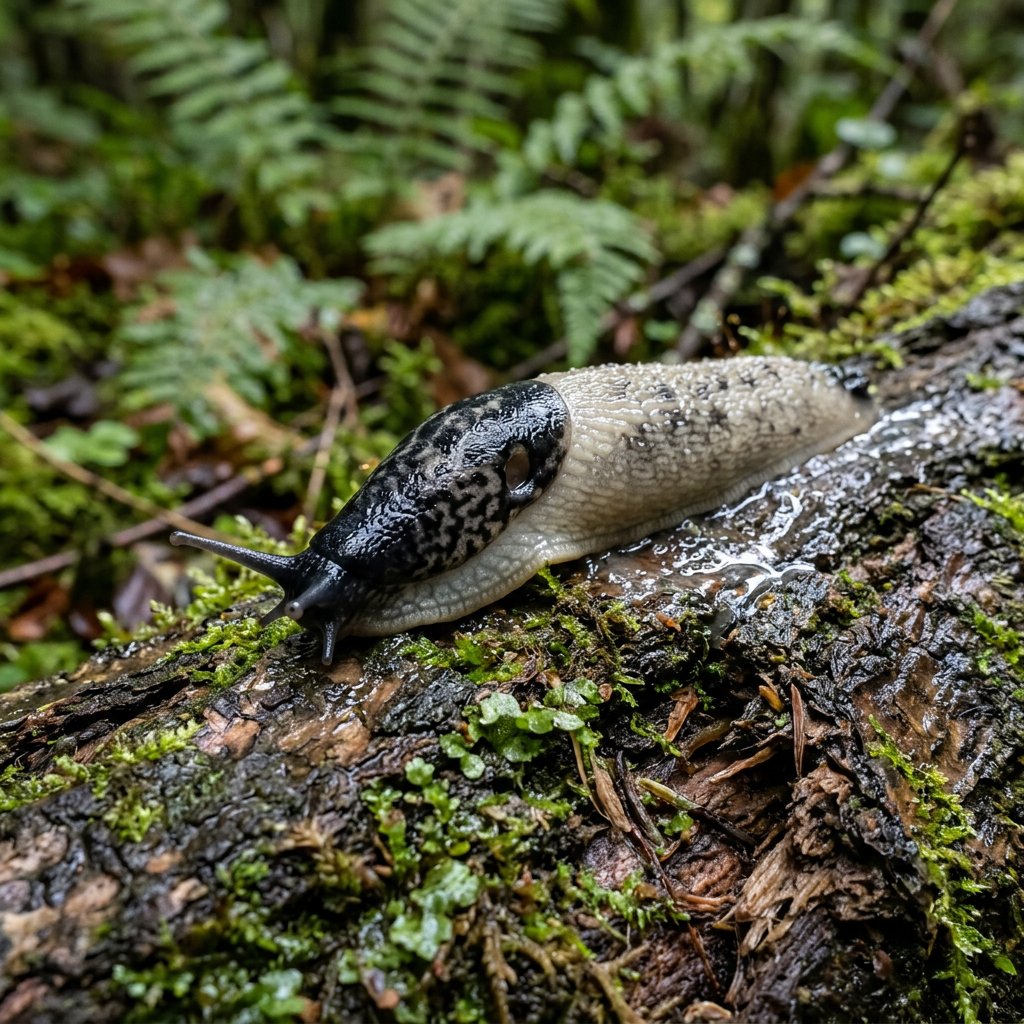
Often called the Black-headed Slug, this striking gastropod is a traveler from the Caucasus and Crimea that has recently expanded across Europe. While you might find it among your garden "bugs," it is actually a terrestrial mollusk rather than an insect. With its clean, pale body and contrasting dark "hood," it looks like it’s wearing a tiny executioner’s mask or a sleek turtleneck.
🔍 How to Identify
- 👤 The "Hood": The most distinguishing feature is the jet-black or dark brown head and neck area, which contrasts sharply with the rest of the body.
- ☁️ Body Color: The main body is usually a milky white, pale gray, or light cream color, giving it a ghost-like appearance as it crawls.
- 📏 Size & Shape: It is a medium-sized slug, typically reaching 4 to 6 centimeters in length, with a relatively slender and smooth body.
🌲 Habitat & Ecology
- 🍂 The Decomposition Crew: These slugs are primarily detritivores, meaning they feast on decaying leaf litter, fungi, and organic garden waste, though they aren't above nibbling on your prized hostas.
- 💧 Moisture Seekers: You will most likely spot them in damp, shaded environments like under flowerpots, beneath rotting logs, or in lush parklands during the early morning dew.
- 🌍 An Invasive Traveler: Because they are highly adaptable and can survive colder temperatures than many native slugs, they are considered an invasive species in many parts of Northern and Eastern Europe.
⚠️ Safety & Toxicity
- 🟢 Non-Venomous: The Black-headed Slug is physically harmless to humans; it does not bite, sting, or carry venom.
- 🐾 Pet Warning: Like all slugs, they can carry parasites such as lungworm. It is important to ensure your dogs or cats do not ingest them, as this can lead to serious respiratory issues for pets.
- 🧼 Slime Hygiene: Their mucus is sticky and difficult to wash off; always wash your hands after handling any slug to avoid the transfer of bacteria or garden parasites.
✨ Fun Fact
Unlike many other slug species that hibernate or die off when the frost hits, the Black-headed Slug is surprisingly cold-tolerant and can remain active even during mild winter spells!
More Details








