Info
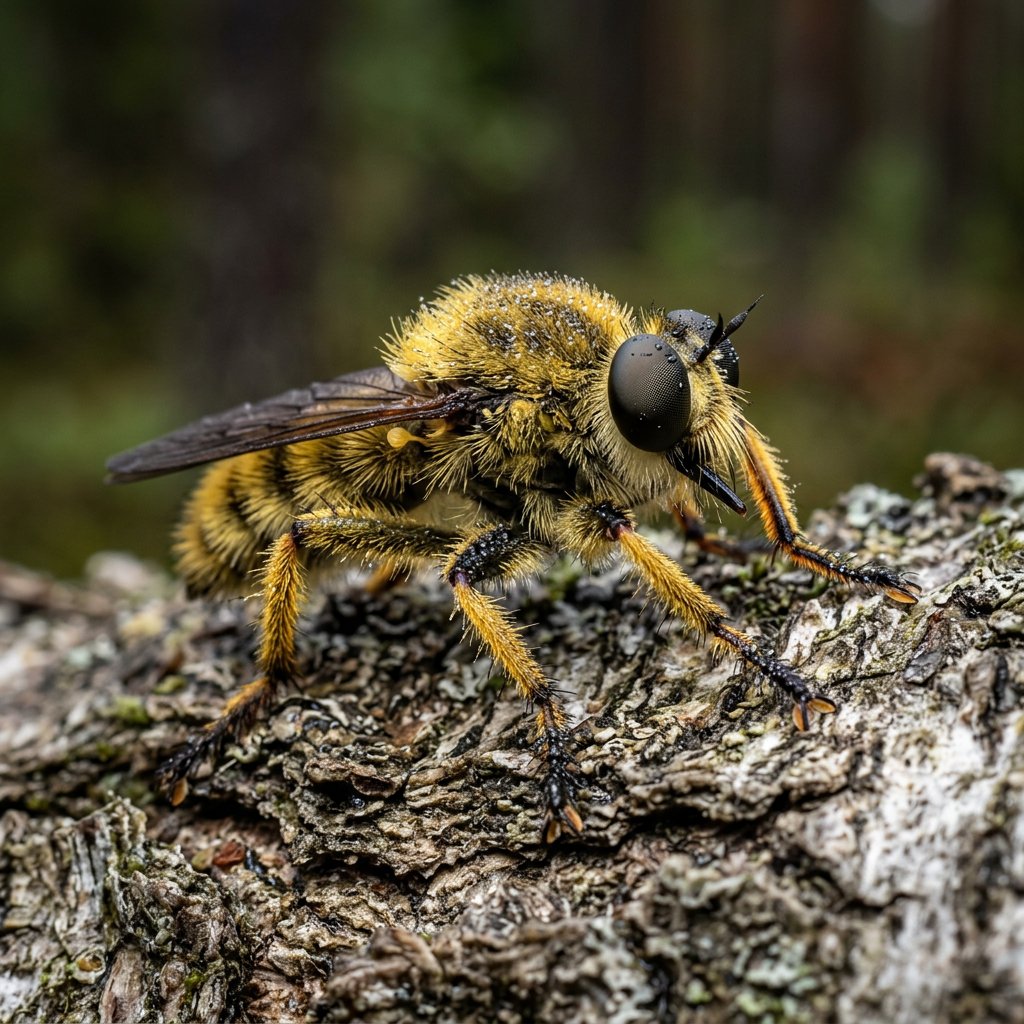
Often called the Yellow Bumblebee Robber Fly, this master of disguise is nature’s "wolf in sheep's clothing." While it looks exactly like a fuzzy, gentle bumblebee, it is actually a fierce, high-speed aerial predator. By mimicking a stinging bee, it successfully tricks predators into leaving it alone while it patrols sunlit forest clearings for its next meal.
🔍 How to Identify
- 🐝 Bumblebee Mimicry: The body is stout and covered in dense, fuzzy yellow and black hairs, making it look almost identical to a common bumblebee at first glance.
- 👀 The "Mustache": It features a prominent patch of stiff bristles on its face called a mystax. This "mustache" acts as a shield to protect the fly’s eyes from the thrashing legs of its prey.
- 🪽 Predatory Beak: Unlike a bee’s soft tongue, this fly has a short, thick, and very strong proboscis (beak) that points forward, designed to pierce the tough shells of beetles.
🌲 Habitat & Ecology
- 🪵 The Log Lookout: You will usually spot them perched on sunlit tree trunks, fallen logs, or stumps. They use these elevated spots as "launch pads" to ambush insects flying nearby.
- ⚔️ Aerial Assassin: They are incredible fliers. Once they spot a target—often a beetle, wasp, or another fly—they snatch it out of mid-air with their powerful, bristly legs.
- 🌲 Conifer Lovers: They are most common in or near pine and spruce forests, where their larvae live in decaying wood and hunt the larvae of wood-boring beetles.
⚠️ Safety & Toxicity
- 🟢 Friend or Foe: They are definitely "friends" to gardeners and foresters, as they help control populations of wood-boring pests.
- 🤏 Biting Risk: They do not have a stinger and are not aggressive toward humans. However, if you try to catch one in your hand, they can deliver a very sharp, painful bite with their proboscis.
- 🐾 Pets: They are not toxic, but a curious dog or cat might get a startling nip if they try to "play" with this fly.
✨ Fun Fact
- 🥤 Liquid Lunch: When a Robber Fly catches its prey, it injects a specialized saliva that paralyzes the victim and dissolves its internal organs into a liquid, allowing the fly to drink its meal through its beak like a straw.
More Details








