Info
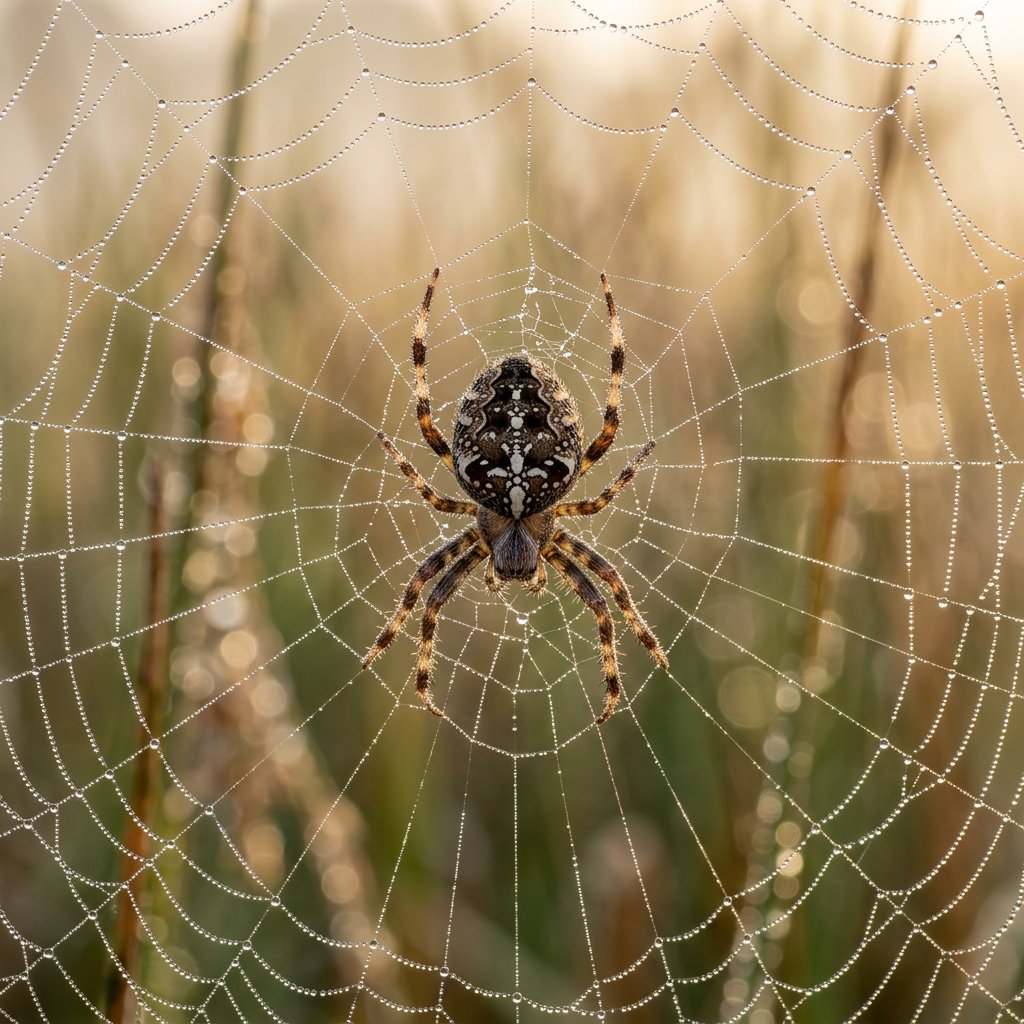
Known as the Furrow Spider or Foliage Orbweaver, Larinioides cornutus is the master architect behind those classic, shimmering circular webs often found near porch lights or garden ponds. This nocturnal weaver is a gardener's silent ally, spending its nights catching pesky mosquitoes and flies. In many cultures, seeing one of these spiders at work is considered a sign of a healthy, balanced backyard ecosystem.
🔍 How to Identify
- 🕷️ The Abdomen: It features a distinctive "foliage" or "furrow" pattern on the back that looks like a jagged leaf or a series of dark chevrons.
- 🎨 Camouflage Tones: Their bodies are typically shades of gray, tan, and dark brown, allowing them to blend perfectly with weathered wood or dried bark.
- 🦵 Banded Legs: The legs are sturdy and covered in fine sensory hairs, often showing faint dark bands that help break up their silhouette.
🌲 Habitat & Ecology
- 💧 Water Lovers: These spiders have a strong preference for moisture. You will most often find them near streams, lakes, or garden water features where flying insects are plentiful.
- 🌙 Nocturnal Routine: They are mostly active at night. During the day, they hide in a silken "retreat" made from a curled leaf or a crack in a fence, staying connected to their web by a single "signal line."
- 🦟 Natural Pest Control: As generalist predators, they provide an essential service by eating massive quantities of midges, mosquitoes, and small moths.
⚠️ Safety & Toxicity
- 🛡️ Status: Generally harmless. They are shy, non-aggressive creatures that would much rather run away than face a human.
- 🦷 The Bite: While they are capable of biting if handled roughly or trapped against the skin, their venom is not medically significant. For most people, a bite feels like a mild pinprick or a weak bee sting with minor localized redness.
✨ Fun Fact
- ♻️ Silk Recycling: To conserve energy, the Furrow Spider often eats its own web at dawn. It digests the silk proteins to "recharge" its body, allowing it to spin a brand-new, sticky web from scratch the very next evening!
More Details








