Info
Often called the Mediterranean Black Widow or the Malmignatte, this striking arachnid is the European cousin of the famous American Black Widow. While its name might send a shiver down your spine, it is a shy, reclusive architect that prefers sun-drenched fields over human bedrooms. In many Mediterranean cultures, its distinctive 13 spots have earned it a legendary status, blending fear with a deep respect for its role in the ecosystem.
🔍 How to Identify
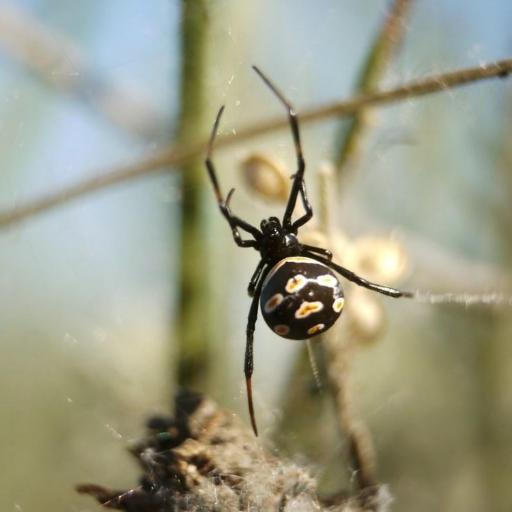
- 🔴 The 13 Spots: Its most famous feature is the 13 reddish, orange, or yellowish spots decorating its charcoal-black abdomen. These spots often fade or merge as the spider matures.
- 🕷️ The Silhouette: Females possess a large, bulbous, glossy black abdomen that dwarfs their cephalothorax. Their legs are long and slender, designed for navigating complex silken threads rather than walking on flat ground.
- 🕸️ The Web: Unlike the neat circular webs of garden spiders, this species spins a chaotic, "messy" looking web of extremely strong silk, usually hidden close to the ground between stones or low-lying shrubs.
🌲 Habitat & Ecology
- 🦗 The Silent Hunter: As a master predator, it plays a vital role in controlling insect populations. It sits patiently in its retreat, waiting for beetles, grasshoppers, or flies to stumble into its high-tensile strength tripwires.
- ☀️ Sun Seeker: You will typically find them in arid, open landscapes like grasslands, steppes, or Mediterranean scrubland. They love heat and are rarely found in damp or heavily forested areas.
- 🌑 Nocturnal Life: They are primarily active at night. During the day, they tuck themselves into small crevices or "funnel" retreats built into their webs to hide from predators like birds and wasps.
⚠️ Safety & Toxicity
- 🚫 Significant Venom: This spider is highly venomous to humans. Its neurotoxic venom (α-latrotoxin) can cause "latrodectism," characterized by intense muscle pain, sweating, and nausea.
- 🐕 Risk Level: While rarely fatal to healthy adults, the bite is a serious medical emergency. Small children, the elderly, and pets (especially cats) are at much higher risk and should be kept away from known nesting sites.
- ✋ Gentle Nature: Despite its reputation, it is not aggressive. Most bites occur when a spider is accidentally squeezed against the skin while someone is gardening or moving old rocks.
✨ Fun Fact
The specific name tredecimguttatus literally translates from Latin to "thirteen-spotted." In some parts of Italy, historical "dancing cures" for spider bites (tarantism) were often blamed on this widow, even though the much larger (and less dangerous) Wolf Spider usually took the fall!
More Details








