Info
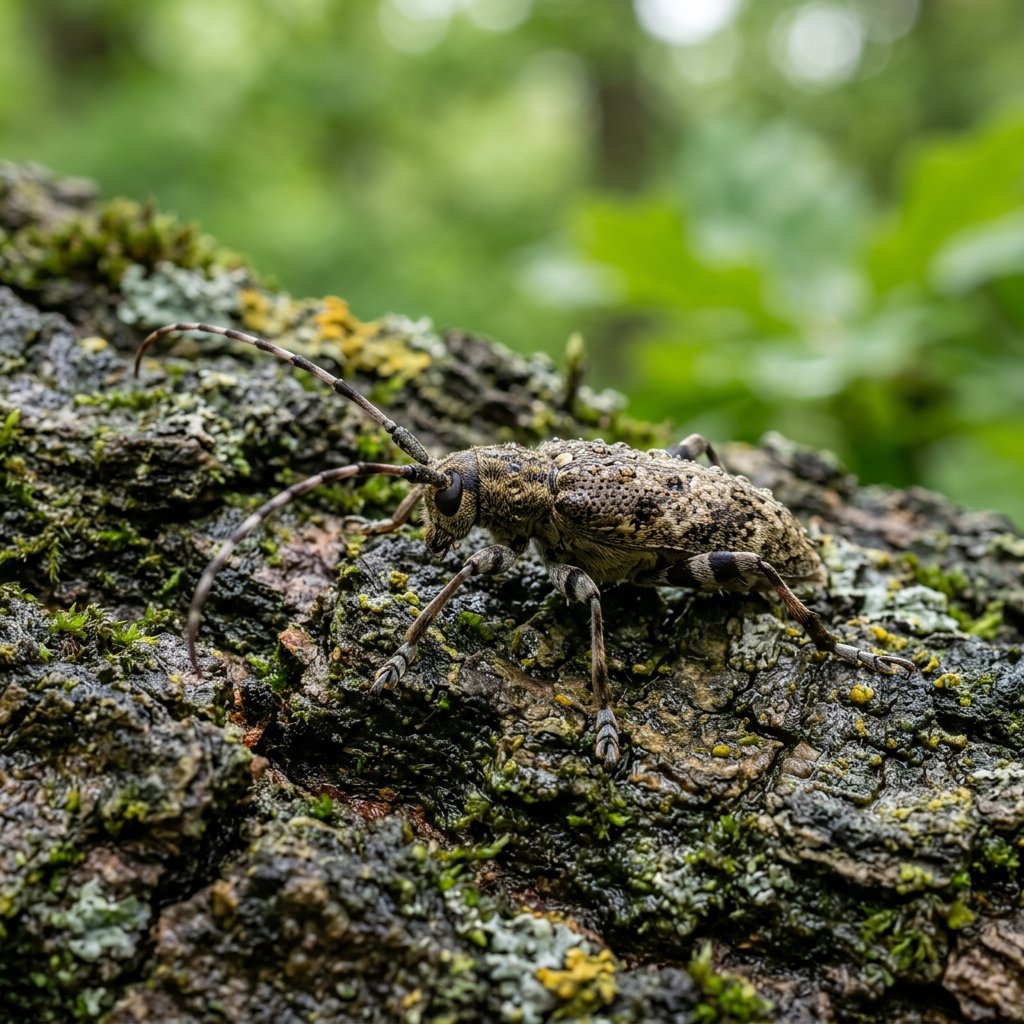
Often overlooked because of its tiny size and incredible camouflage, Leiopus femoratus is a miniature marvel of the longhorn beetle family. With its delicately patterned body, it blends perfectly into the lichen-covered bark of old deciduous trees. While its long antennae might look intimidating to some, this little beetle is actually a gentle recycler of the forest, helping turn old wood back into nutrient-rich soil.
🔍 How to Identify
- 📏 Antennae Length: Typical of the Longhorn family, its "whiskers" are remarkably long—often exceeding the length of its own body—and are used to "smell" and navigate its environment.
- 🎨 Camouflage Coat: The wing covers (elytra) feature a complex, mottled mosaic of gray, black, and white spots, designed to make the beetle disappear against mossy or lichen-covered bark.
- 🦵 Thickened Thighs: The species name femoratus refers to its distinctive "thighs" (femora), which are noticeably swollen and club-shaped compared to other small beetles.
🌲 Habitat & Ecology
- 🪵 Deadwood Specialist: You are most likely to spot this beetle on the branches of deciduous trees like Oak, Hazel, Chestnut, or Walnut. It specifically seeks out wood that is already dead or weakened.
- 🛠️ Nature’s Cleanup Crew: This is not a "villain" in your garden. It doesn't kill healthy plants; instead, its larvae live under the bark of fallen branches, playing a vital role in the natural process of decomposition.
- 🌙 Twilight Traveler: They are most active during the warm evenings of summer, often resting motionless on bark during the day to avoid being spotted by birds.
⚠️ Safety & Toxicity
- 🛡️ Harmless Neighbor: This beetle is entirely non-toxic and lacks any form of stinger. It is a peaceful visitor that is more likely to drop to the ground and play dead than to interact with you.
- 🤏 Low Bite Risk: While it possesses tiny mandibles used for nibbling bark, it is not aggressive. It poses no threat to humans, children, or curious household pets.
✨ Fun Fact
✨ Hidden in Plain Sight: Leiopus femoratus is so good at hiding that many entomologists believe it is far more common than records suggest; people simply walk right past them every day thinking they are just a bump on a twig!
More Details








