Info
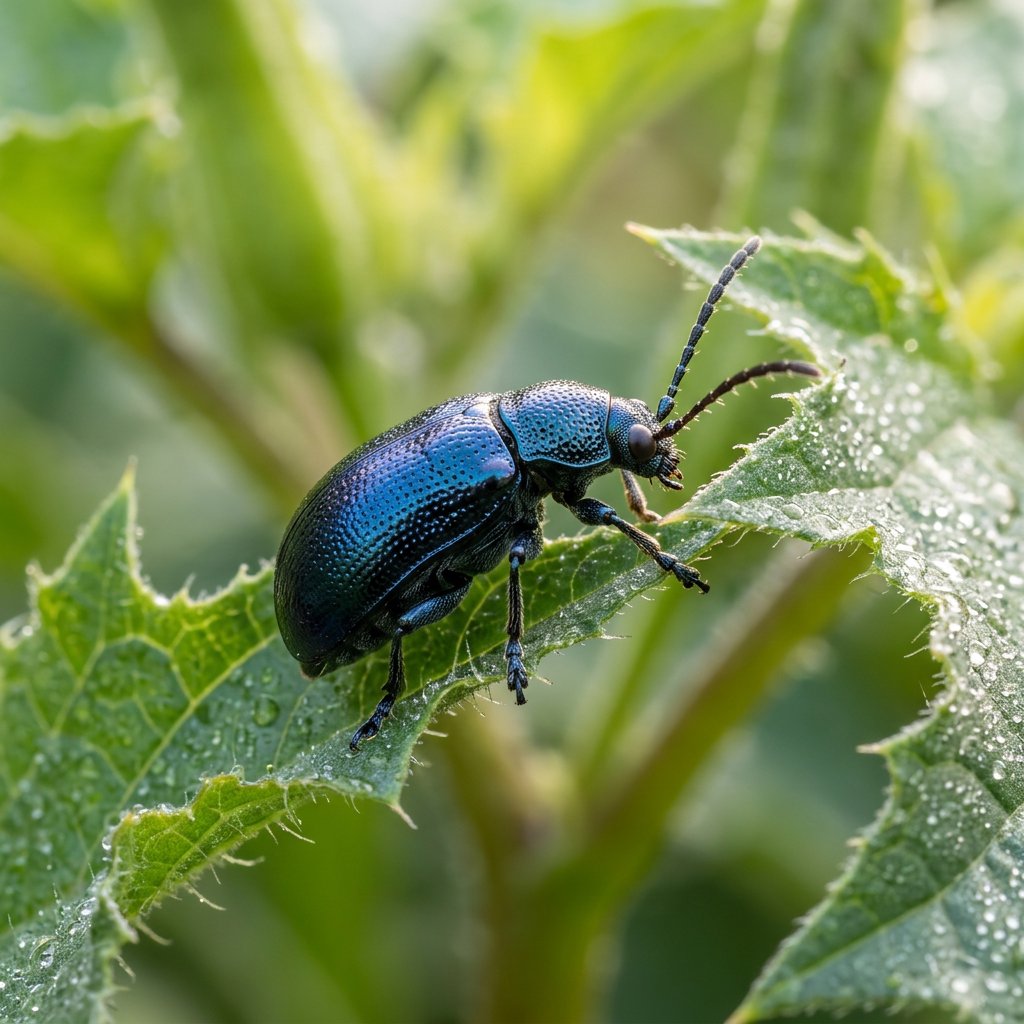
Meet the flashy Three-lined Potato Beetle, a common guest in vegetable patches and wild meadows alike. While its bold stripes might make it look like a tiny, colorful sports car, this insect is a dedicated specialist of the nightshade family. It is most famous (or infamous) for its unusual larvae, which use a rather "stinky" defense strategy to keep hungry birds at bay.
🔍 How to Identify
- 🪲 The Stripes: Look for three prominent black longitudinal lines running down the length of its creamy yellow or pale orange wing covers.
- 📍 The Neck Spots: A key identifying feature is the presence of two distinct black dots on the orange thorax (the segment just behind the head).
- 🍃 Egg Clusters: They lay tiny, bright orange-yellow eggs, usually glued in neat rows or small clusters to the undersides of host leaves.
🌲 Habitat & Ecology
- 🍽️ Picky Eaters: These beetles are specialists that feed almost exclusively on plants in the Solanaceae (nightshade) family. While they love potatoes and tomatillos, they are frequently found on wild Jimsonweed (Datura).
- 💩 The "Fecal Shield": The larvae have a bizarre and effective survival tactic; they coat their backs with their own sticky excrement. This "frass" contains toxins from the plants they eat, making them physically repulsive to predators like ants and birds.
- 🚜 Garden Presence: You will likely spot them in mid-to-late summer. While they can skeletonize leaves, they are usually less destructive than their cousin, the Colorado Potato Beetle.
⚠️ Safety & Toxicity
- ✅ Status: Completely harmless to humans and pets. They do not bite, sting, or secrete venom.
- ☢️ Chemical Protection: Because they consume plants containing toxic alkaloids (like Datura), the beetles themselves are unpalatable. If a pet were to eat a large quantity, it might cause mild stomach upset, but they are generally avoided by animals due to their bitter taste.
- 🌿 Garden Management: To protect your vegetables without harsh chemicals, they can be easily hand-picked and dropped into a bucket of soapy water.
✨ Fun Fact
The larvae's "poop shield" is actually a sophisticated piece of chemical engineering! By concentrating the alkaloids from the poisonous plants they eat into their waste, they create a chemical barrier so potent that even hungry spiders will run away after just one sniff.
More Details








