Info
Known to many as the "Itchy Grub" or the White Cedar Moth, Leptocneria reducta is a master of the population boom. While the adult moths are humble and camouflaged, their larval stage is famous—or perhaps infamous—across Australia for its ability to strip a tree bare overnight and send residents running for the anti-itch cream.
🔍 How to Identify
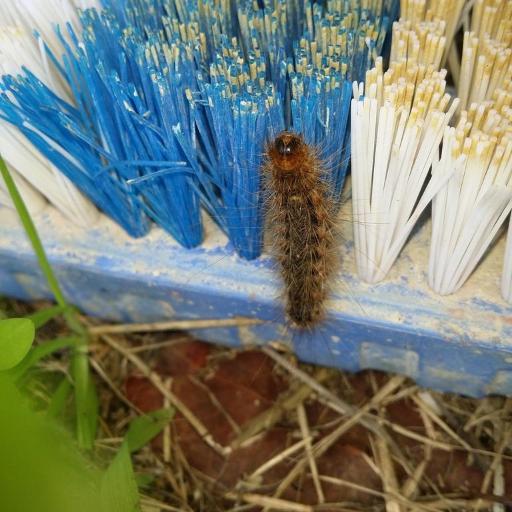
- 🐛 The Caterpillar: These larvae are dark, fuzzy powerhouses covered in dense, long, greyish-brown hairs. They often have a thin pale line running down their back and a distinctly reddish-brown head.
- 🦋 The Adult Moth: Far more subtle than their children, the adults are medium-sized with a wingspan of about 4-5 cm. They sport dull, brownish-grey wings with faint wavy patterns that help them disappear against tree bark.
- 🧶 The Mass Gathering: One of the easiest ways to identify them is by their behavior; during the day, hundreds or even thousands of caterpillars huddle together in a thick, squirming "felt" at the base of a tree or under a window ledge.
🌲 Habitat & Ecology
- 🍽️ The Host Tree: This insect is a specialist. It is almost exclusively found on the White Cedar (Cape Lilac) tree. If you see a tree being rapidly defoliated in mid-to-late summer, these moths are the likely culprits.
- 🌙 Nocturnal Commuters: They follow a strict schedule. They hide at the base of the tree or in house crevices during the day to avoid birds, then march up the trunk in a massive, fuzzy parade at sunset to feast on the leaves.
- 🏘️ Urban Explorers: Because White Cedars are popular shade trees in suburbs, these insects frequently come into contact with humans, often "invading" porches and walls when looking for a place to pupate.
⚠️ Safety & Toxicity
- 🚫 Status: DO NOT TOUCH. The caterpillars are covered in "urticating" hairs—tiny, barbed bristles designed to irritate the skin and lungs of predators.
- 🧴 Skin Irritation: Physical contact usually results in a severe, itchy red rash (dermatitis) that can last for days. In some cases, the hairs can become airborne, causing eye irritation or respiratory discomfort.
- 🐾 Pet Safety: Keep curious dogs and cats away. If a pet tries to sniff or eat these caterpillars, the hairs can cause painful swelling in the mouth and throat.
✨ Fun Fact
The White Cedar Moth is a "boom and bust" species. In a "good" year, their numbers are so high that they can completely strip every single leaf off a massive 50-foot tree in just a few days, leaving nothing but bare branches and thousands of hungry, wandering caterpillars.
More Details








