Info
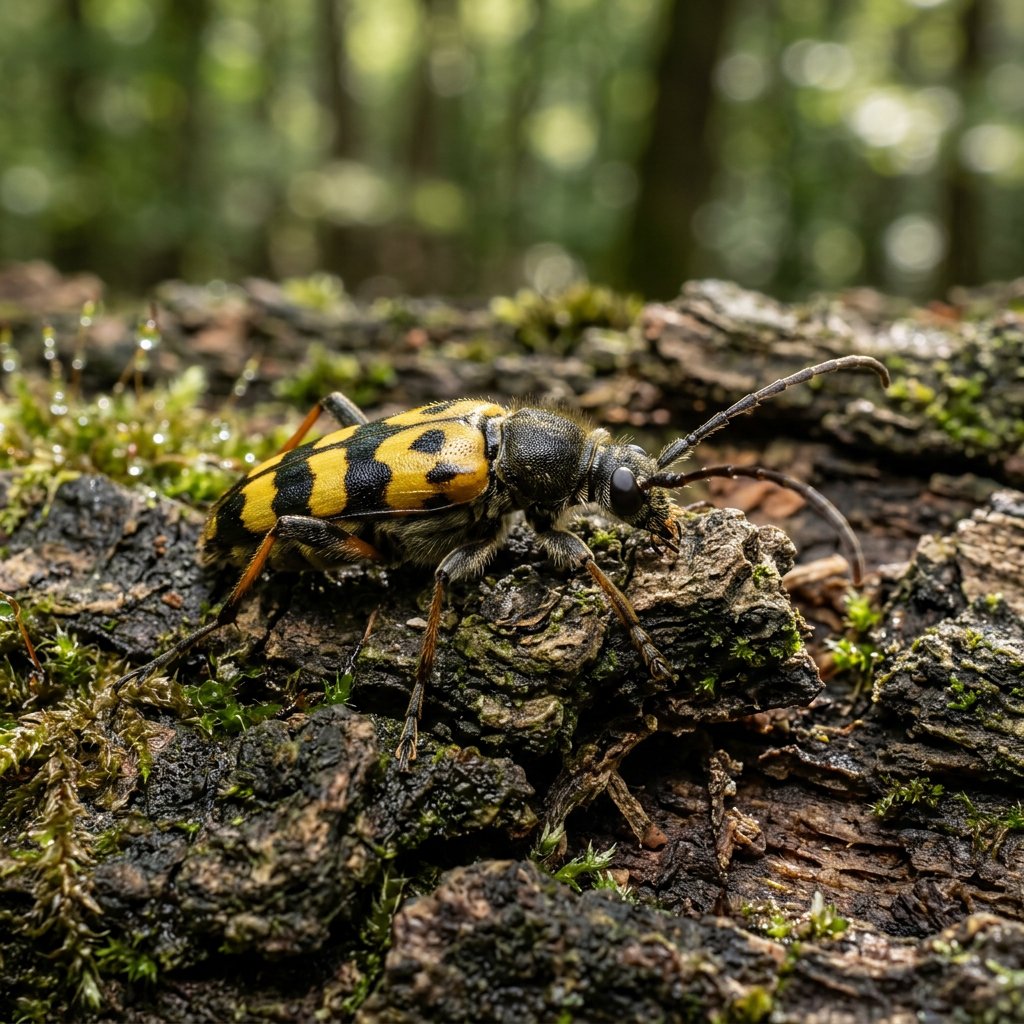
Known as the Four-banded Longhorn Beetle, this striking insect is a master of visual deception. Often mistaken for a common wasp due to its bold yellow-and-black stripes, it is actually a peaceful beetle that spends its summer days lounging on wild flowers. It is a common and welcome sight in European woodlands and gardens, acting as both a busy pollinator and a tiny recycler of the forest floor.
🔍 How to Identify
- 🐝 The Bands: Features four distinct, zig-zagging yellow or orange bands across its black wing cases (elytra). These markings vary slightly between individuals but always create a high-contrast "danger" signal to predators.
- 📏 The Body: Has a narrow, elongated shape that tapers toward the rear, giving it a sleek, aerodynamic silhouette compared to the rounder shape of ladybugs or leaf beetles.
- 📶 The Antennae: True to its "Longhorn" family name, it sports long, elegant antennae that are segmented and can reach over half the length of its entire body.
🌲 Habitat & Ecology
- 🌼 The Summer Buffet: You will most likely spot adults during mid-summer on large, flat-topped white flowers (umbellifers) like Hogweed, Wild Carrot, or Elderberry, where they feast greedily on nectar and pollen.
- 🪵 The Wood Recycler: While the adults love the sun, the larvae spend two to three years tucked away inside moist, decaying stumps of broadleaf trees like Birch, Willow, or Alder. They play a vital role in the ecosystem by breaking down old wood into nutrient-rich soil.
⚠️ Safety & Toxicity
- 🛡️ Harmless Mimic: Despite its "scary" wasp-like appearance, this beetle is a "sheep in wolf's clothing." It possesses no stinger and is entirely non-venomous.
- 🐾 Pet & Human Safe: It is not known to be toxic if accidentally touched or even nipped at by a curious pet. While it has mandibles for eating, it is not aggressive and will usually fly away if disturbed.
✨ Fun Fact
🎭 The Great Pretender: This beetle uses "Batesian mimicry"—a survival strategy where a harmless species evolves the colors of a dangerous one. By "cosplaying" as a wasp, it tricks birds and other predators into thinking it’s a snack that might sting back!
More Details








