Info
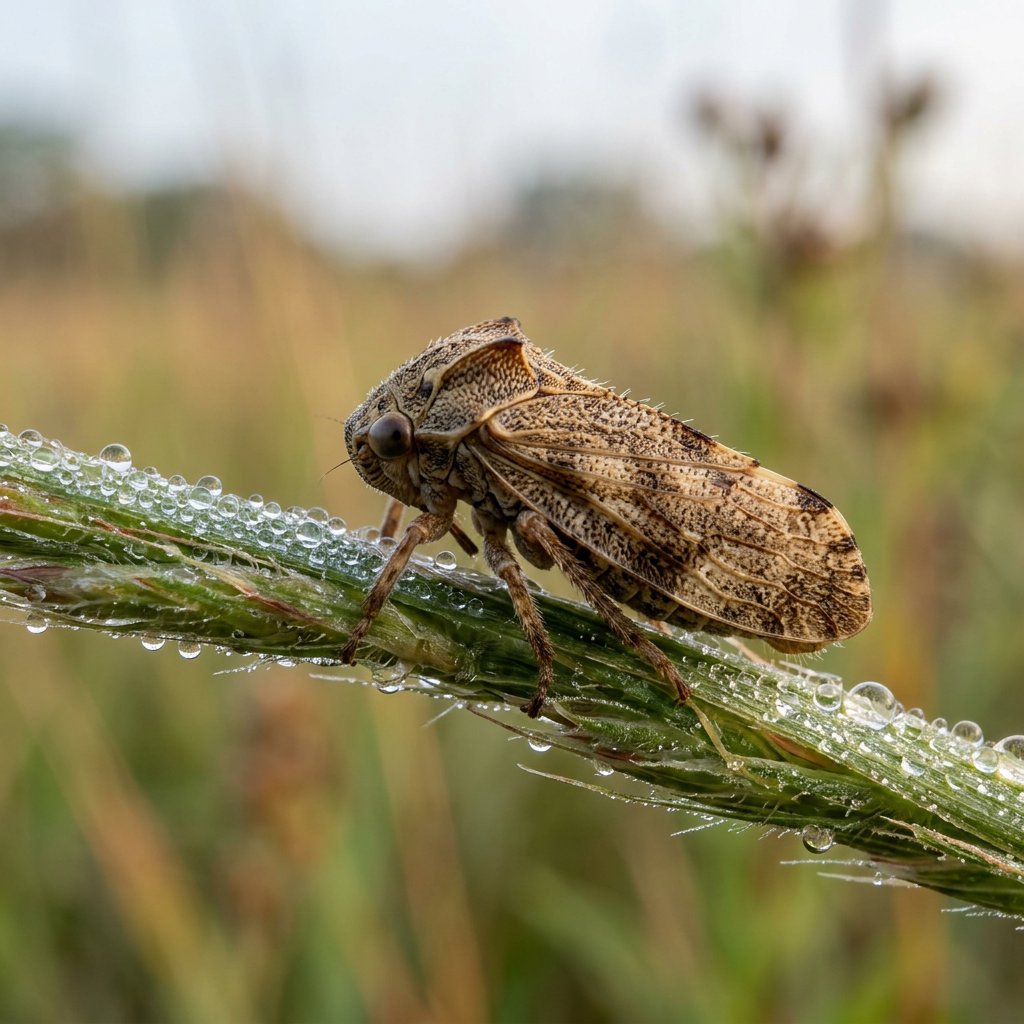
Meet the tiny architect behind those mysterious clusters of bubbles often found clinging to garden stems. Lepyronia gibbosa, commonly known as a Froghopper or Spittlebug, is a master of camouflage and a world-class acrobat. While they are often overlooked due to their small size, their presence is usually announced by the "cuckoo spit" their young produce to stay hidden and hydrated.
🔍 How to Identify
- 🐸 Body Shape: True to their name, they have a broad, squat appearance that mimics a tiny frog, with a distinctively humped or "gibbosus" (Latin for "hunchbacked") profile.
- 🍂 Coloration: They are typically mottled in shades of tan, brown, and grey, allowing them to blend perfectly against dried leaves, bark, or stems.
- 🫧 The "Spittle": If you see a cluster of white, frothy bubbles on a plant, you’ve likely found the nursery of a nymph Lepyronia gibbosa.
🌲 Habitat & Ecology
- 🧃 Sap Suckers: These insects feed exclusively on plant sap. While they take nutrients from the plant, they rarely cause significant damage unless they appear in massive numbers.
- 💨 High-Pressure Jumpers: They are among the most powerful jumpers in the animal kingdom. Using a "catapult" mechanism in their hind legs, they can launch themselves at speeds that would make a professional athlete envious, escaping predators in the blink of an eye.
- 🛡️ The Foam Fortress: The nymphs (young) whip up excess plant fluids into a soapy foam. This "spittle" protects them from drying out in the sun and acts as a nasty-tasting barrier against hungry birds or spiders.
⚠️ Safety & Toxicity
- 🟢 Status: Completely harmless to humans and pets.
- 🤝 Interaction: They do not bite, sting, or carry diseases that affect people. If you find them in your garden, they are more of a curiosity than a threat. You can easily wash away the "spittle" with a gentle stream of water if you dislike the look of it.
✨ Fun Fact
Relative to their body size, a froghopper’s jump is more powerful than a space shuttle launch! They exert a force that is 400 times their body weight to propel themselves into the air, reaching heights of over 2 feet in a fraction of a second.
More Details








