Info
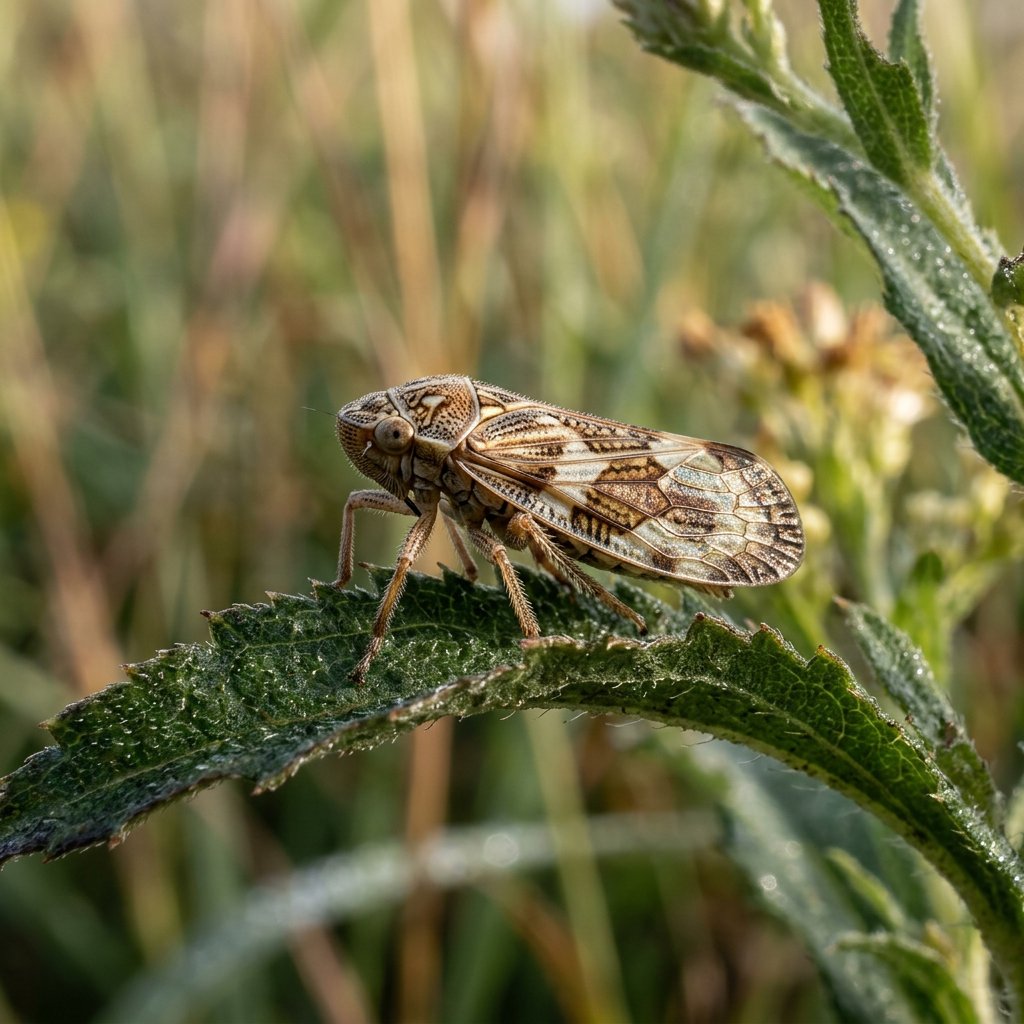
Often referred to as the Diamondback Spittlebug, this insect is a master of architectural disguise and high-pressure jumping. While you might spot the adults blending into dried leaves, you are more likely to find their "nursery"—tiny clusters of white bubbles clinging to plant stems. They are fascinating, harmless garden dwellers that look like miniature, armored tanks when viewed up close.
🔍 How to Identify
- 💎 The Diamond Silhouette: Its most defining feature is the wide, geometric "diamond" shape created by the wings when the insect is at rest.
- 🍂 Mottled Camouflage: The body is typically a dull, mottled brown or tan, which allows it to disappear against tree bark and decaying organic matter.
- 🐸 Froglike Face: Like other froghoppers, it has a blunt, wide head and large eyes, giving it a slightly "froggy" appearance from the front.
🌲 Habitat & Ecology
- 🧼 The Spittle Fortress: As nymphs (babies), they excrete a soapy, bubbly mass often called "cuckoo spit." This froth isn't just for show; it protects the soft-bodied insect from predators, keeps them from drying out, and insulates them from the heat.
- 🌱 Xylem Feeders: They feed exclusively on plant sap. Because sap is mostly water and low in nutrients, they have to drink massive amounts of it, which provides the excess fluid needed to blow their famous bubbles.
⚠️ Safety & Toxicity
- ✅ Completely Harmless: Diamondback Spittlebugs do not bite, sting, or transmit diseases to humans or pets. They are "friends" of the curious gardener.
- 💧 Garden Management: While the "spittle" might look messy on your roses or herbs, these insects rarely cause significant damage to plants. If the bubbles bother you, a simple spray of water from a garden hose is enough to wash them away without using chemicals.
✨ Fun Fact
🚀 The Tiny Astronaut: Spittlebugs are some of the most powerful jumpers in the world. When an adult leaps, it experiences a force of over 400Gs—that is more than 40 times the force a fighter pilot feels during a high-speed maneuver!
More Details








