Info
Often called the "Toe-biter" or the "Electric Light Bug," the Giant Water Bug is the heavyweight champion of the freshwater world. These formidable insects are among the largest in North America, often startling swimmers and gardeners alike with their prehistoric appearance. While they might look like something out of a sci-fi movie, they play a vital role as apex predators in their aquatic ecosystems.
🔍 How to Identify
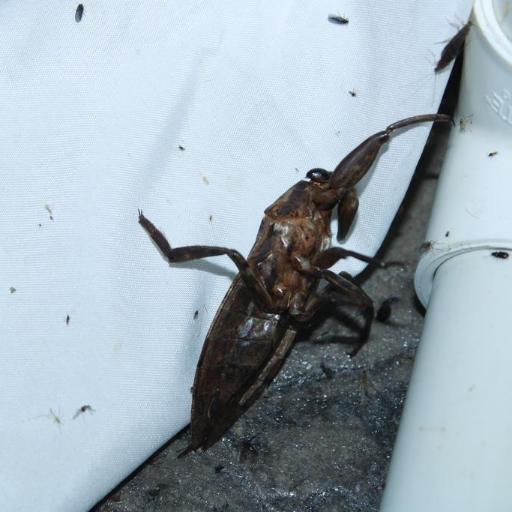
- 🛶 Body Shape: A large, flattened, oval-shaped body that resembles a dead leaf, typically ranging from 2 to 3 inches in length.
- 🥊 Raptorial Forelegs: Thick, powerful front legs curved inward specifically for grabbing and pinning down slippery prey like fish or frogs.
- ⚓ The "Snorkel": Two short, retractable breathing tubes at the tip of the abdomen which they poke above the water's surface to breathe while submerged.
- 🟤 Camouflage: A dull, mottled brown or grayish-tan color that allows them to blend perfectly into muddy pond bottoms and decaying vegetation.
🌲 Habitat & Ecology
- 💧 Aquatic Ambush: They prefer slow-moving or stagnant freshwater, such as ponds, marshes, and lake edges. They typically hang motionless from submerged plants, waiting for a meal to swim by.
- 🔦 Night Flights: Despite being aquatic, they are strong fliers. On warm summer nights, they often leave the water to find mates, frequently landing under porch lights or streetlamps—hence the nickname "Electric Light Bug."
- 🐟 Apex Predator: Their diet is surprisingly ambitious; they routinely hunt tadpoles, small fish, and even small snakes or frogs by injecting them with powerful digestive enzymes.
⚠️ Safety & Toxicity
- 🦶 Status: Painful Biter. While not aggressive toward humans, they will defend themselves if stepped on or handled.
- 💉 The Bite: Their bite is famously painful, often compared to a hornet sting. They inject digestive saliva that causes a localized burning sensation and swelling.
- 🛡️ Precaution: If you find one on your patio or in your pool, do not pick it up with bare hands. Use a net or a container to relocate it back to a nearby water source.
✨ Fun Fact
When threatened, the Giant Water Bug is a master of "playing possum." It will go completely limp and appear dead for several minutes, only to suddenly spring back to life and swim away once the predator (or curious human) lets their guard down!
More Details








