Info
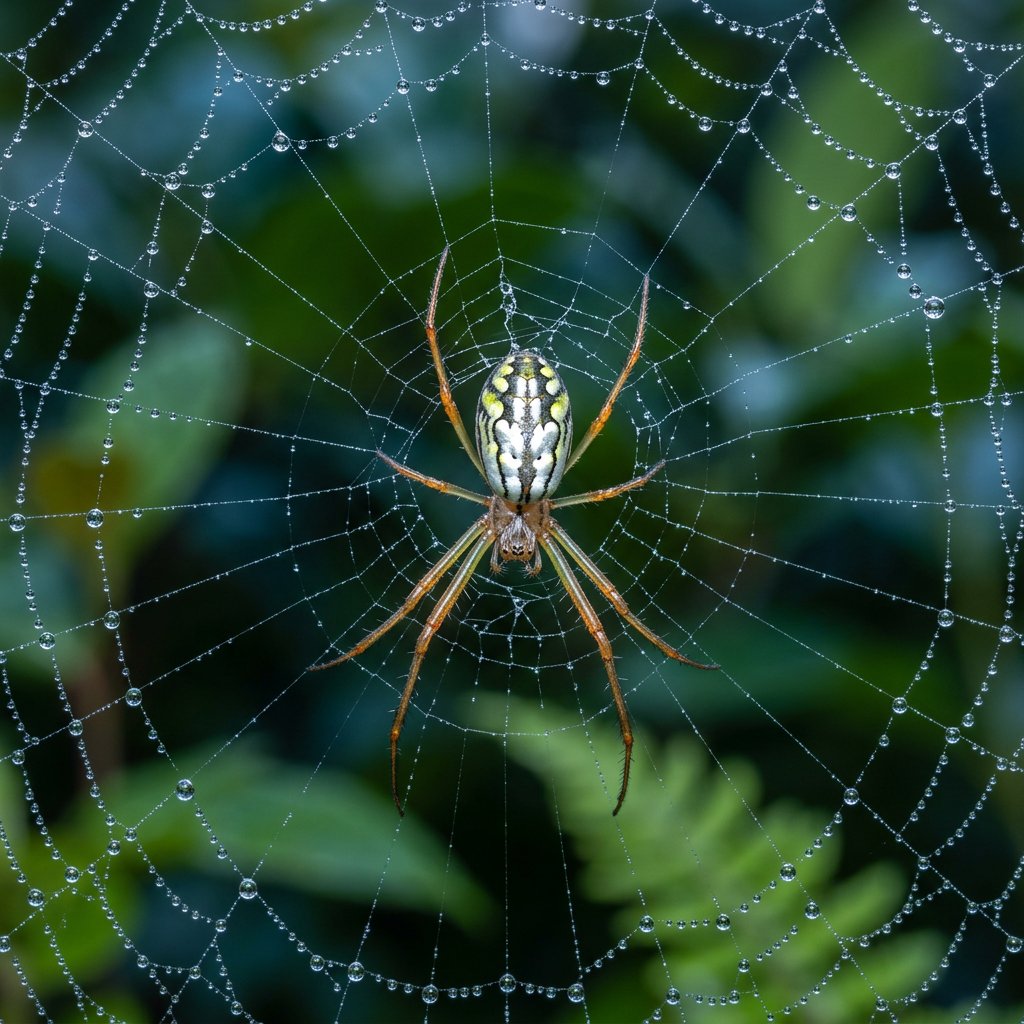
Often called the Celebes Silver Spider, this striking arachnid is a jewel of the tropical garden. While frequently mistaken for an insect, this long-jawed orb-weaver is actually a master architect known for its shimmering, metallic body that looks like a drop of liquid mercury suspended in mid-air. They are common sights in Southeast Asia and the Pacific, acting as silent guardians that keep local fly populations in check.
🔍 How to Identify
- 💎 Metallic Abdomen: The most striking feature is its elongated, silver-colored abdomen, often decorated with intricate black, gold, or neon-green patterns.
- 🦵 Lanky Limbs: It possesses long, slender legs—the front pairs are significantly longer—which are often a translucent pale green or yellowish-brown.
- 🕸️ The Slanted Web: Unlike many spiders that build vertical webs, Leucauge celebesiana often constructs its orb web at a horizontal or diagonal angle, sitting right in the center facing downward.
🌲 Habitat & Ecology
- 🌿 Low-Lying Greenery: You will typically find them in damp, shaded areas, stretching their webs between shrubs, tall grasses, or garden plants near water sources.
- 🦟 Nature’s Pest Control: They are opportunistic predators that feed on small flying insects like mosquitoes, midges, and fruit flies, making them a "friend" to any gardener.
- ⛱️ Heat Management: Their silver coloration isn't just for show; it reflects sunlight, helping the spider stay cool while sitting in exposed areas of the garden during the heat of the day.
⚠️ Safety & Toxicity
- 🟢 Harmless Neighbor: These spiders are extremely shy and will usually drop from their web or run to the edge if they feel vibrations from a human.
- 🩹 Mild Venom: While they do possess venom to subduing prey, it is not medically significant to humans. A bite—which is very rare—is typically less painful than a bee sting and causes only minor, temporary irritation.
- 🐾 Pet Friendly: They pose no threat to curious cats or dogs and generally stay high enough in their webs to avoid accidental encounters.
✨ Fun Fact
The "Silver" on their back is caused by tiny guanine crystals located just under their skin. These crystals reflect light so efficiently that the spider can actually change the intensity of its "shimmer" to blend in with the dappled sunlight filtering through the leaves!
More Details








