Info
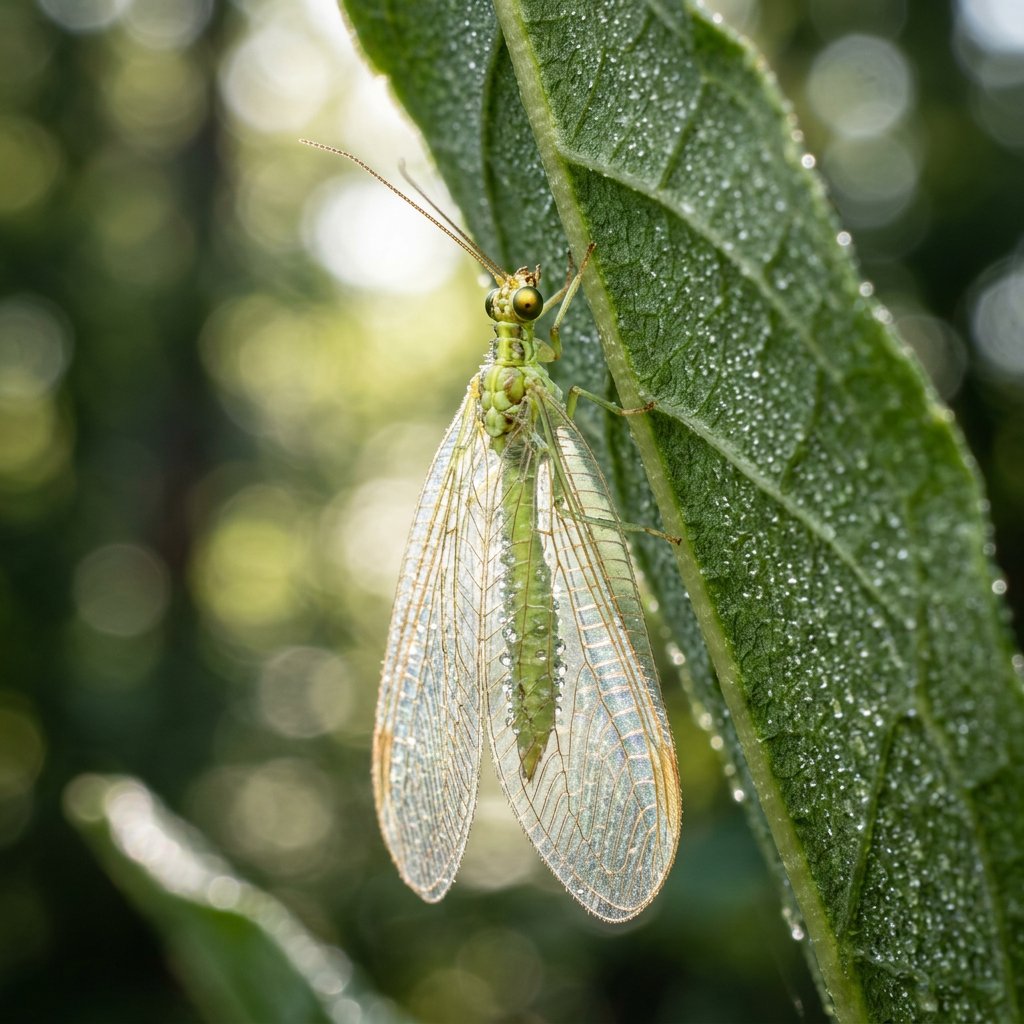
Commonly known as a Pale Green Lacewing, this delicate insect is a true "garden guardian." With its shimmering, iridescent wings and metallic eyes, it looks more like a woodland fairy than a ruthless predator. Don't be fooled by its fragile appearance; this insect is one of the most effective natural pest controllers you can have in your backyard.
🔍 How to Identify
- 🕸️ The Wings: Large, transparent, and intricate, featuring a complex network of veins that resemble fine lace.
- 🟢 The Body: A slender, pale green or lime-yellow body that helps it blend perfectly with leafy foliage.
- ✨ The Eyes: Striking, metallic-looking eyes that often glow with a golden or copper sheen in the light.
- 📡 The Antennae: Long, thread-like antennae that are constantly twitching to sense vibrations and scents in the air.
🌲 Habitat & Behavior
- 🦁 Aphid Lions: While the adults often feed on nectar and pollen, their larvae are nicknamed "Aphid Lions." They are voracious hunters, using sickle-shaped mandibles to clear your roses of aphids, mites, and scale insects.
- 🌙 Night Flyers: These insects are primarily nocturnal. If you leave a porch light on during a warm summer evening, you’ll likely see them fluttering softly against the glass, drawn to the glow.
- 🍃 Garden Value: Having these in your garden is a sign of a healthy ecosystem. They act as a biological pesticide, reducing the need for harsh chemicals to protect your plants.
⚠️ Safety & Toxicity
- ✅ Harmless Friend: Leucochrysa pavida is completely harmless to humans. They do not sting, and they do not carry diseases.
- 🛡️ Gentle Nature: They pose no threat to pets or children. On rare occasions, a larva might give a tiny, harmless "nip" if it crawls on your skin, but it is not venomous and usually doesn't even break the skin.
✨ Fun Fact
Green Lacewings have "ears" located at the base of their front wings! They can detect the high-frequency echolocation pulses of hunting bats, allowing them to fold their wings and drop out of the sky to avoid being eaten in mid-air.
More Details








