Info
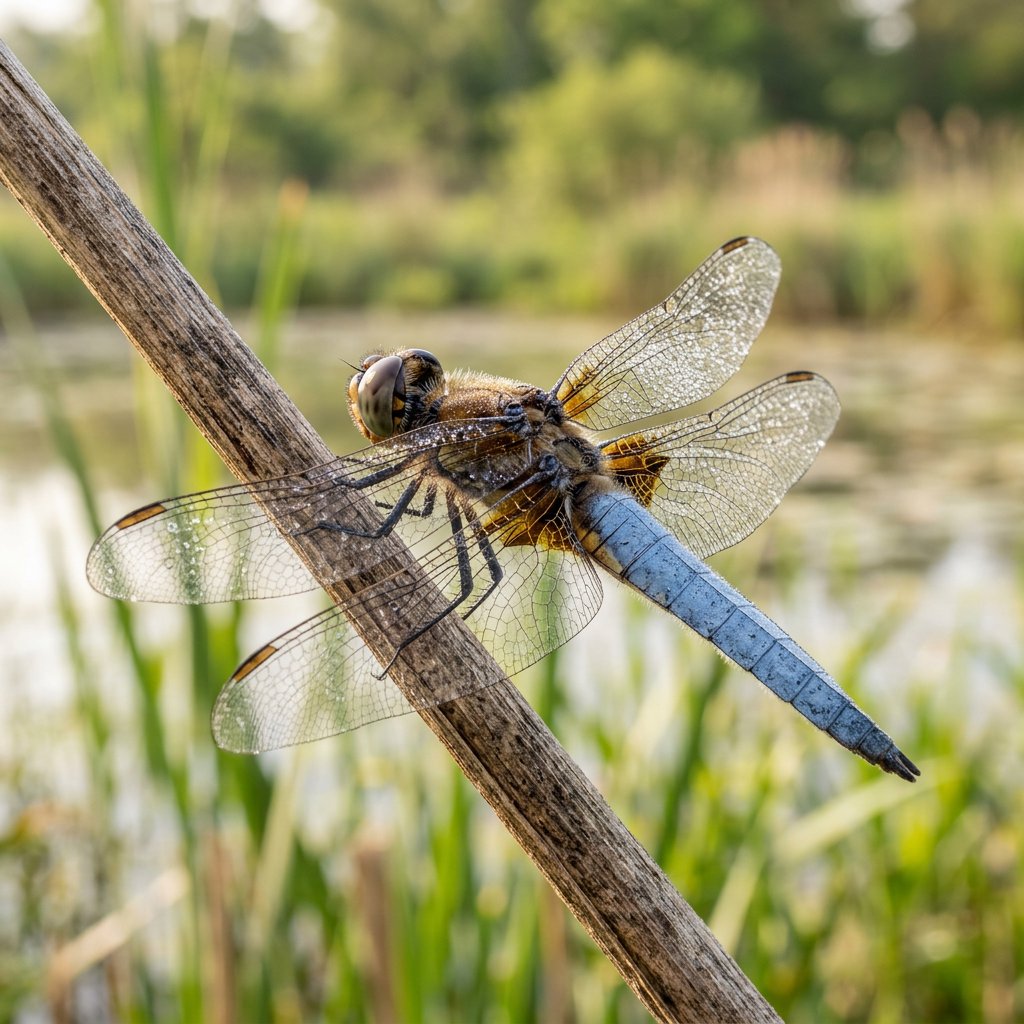
Meet the Broad-bodied Chaser, one of the most distinctive and bold dragonflies you’ll ever find patrolling a backyard pond. Often nicknamed the "Flatman" because of its unusually wide, pancake-flat abdomen, this insect is a true "pioneer" species. It is famous for being the very first dragonfly to move into a brand-new garden pond, often arriving just days after the water is poured.
🔍 How to Identify
- 翼 Wing Patches: Look for four distinct, dark-brown triangular splashes at the base of each wing—a signature mark of this species.
- 📏 Broad Abdomen: Unlike the long, needle-thin bodies of most dragonflies, this one has a very wide, flattened tail section that makes it look "chunky."
- 🎨 Color Dimorphism: Mature males are a striking "pruinose" powder blue, while females and young males are a vibrant golden-brown with yellow spots along the sides.
🌲 Habitat & Ecology
- 💧 The Pond Sentinel: They prefer still, shallow water with plenty of sunshine. You will often see them return to the exact same perch—a favorite reed or twig—over and over again after "chasing" away an intruder.
- 🦟 Aerial Hunter: These are the fighter jets of the garden. They catch flies, mosquitoes, and midges mid-air, using their hairy legs like a basket to scoop up prey before returning to their perch to eat.
⚠️ Safety & Toxicity
- 🛡️ Status: Completely harmless and beneficial.
- 🚫 No Stingers: Despite their intimidating size and fast, darting flight, dragonflies do not have stings. While a very large one might give a tiny "pinch" if handled roughly, they prefer to fly away and present zero risk to children or pets.
✨ Fun Fact
The blue color on the male isn't actually a pigment in the skin; it’s a waxy "dust" or bloom called pruinescence that develops as they age, much like the dusty coating on a fresh plum or grape!
More Details








