Info
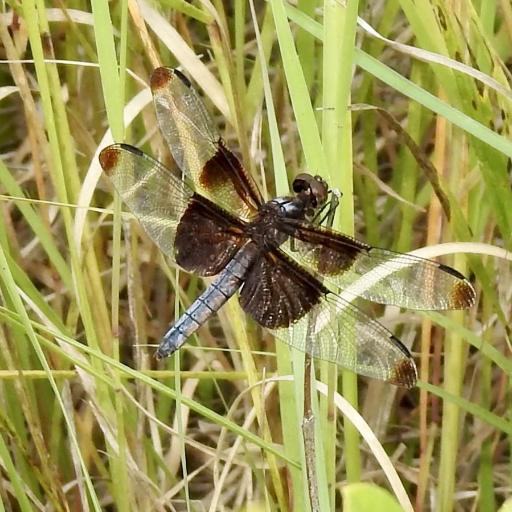
The Widow Skimmer (Libellula luctuosa) is one of the most visually striking dragonflies patrolling the ponds and marshes of North America. Its dramatic name comes from the large, dark "mourning" patches on its wings, which contrast beautifully with its surroundings. These aerial acrobats are a gardener’s best friend, acting as a natural pest control system that works from dawn until dusk.
🔍 How to Identify
- 🖤 Wing Patches: Look for bold, dark brown or blackish-brown bands at the base of all four wings.
- ❄️ Male Pruinosity: Mature males develop a chalky, "frosted" white patch right next to the dark bands, making them stand out vividly in flight.
- 🟡 Female Markings: Females and young males lack the white patches and instead feature a golden-brown body with a distinct yellow stripe running down each side of the abdomen.
🌲 Habitat & Ecology
- 💧 Stagnant Water: These dragonflies prefer the quiet life, usually found around ponds, lakes, marshes, and even slow-moving streams with plenty of mud at the bottom.
- 🦟 The Aerial Hunter: Widow Skimmers are "perchers." They sit on tall grasses or twigs, darting out to snatch mosquitoes, gnats, and flies mid-air before returning to the same spot to eat.
- 🌾 Territorial Displays: You will often see males chasing each other away from the water's edge. They are highly protective of their chosen hunting grounds and potential nesting sites.
⚠️ Safety & Toxicity
- ✅ Harmless Neighbor: The Widow Skimmer is completely safe for humans and pets.
- 🛡️ No Sting: While their long, pointed bodies might look intimidating to some, dragonflies do not have stingers. They are beneficial insects that actually help reduce the population of biting bugs like mosquitoes.
✨ Fun Fact
Dragonflies like the Widow Skimmer are ancient survivalists; their ancestors were flying around over 300 million years ago, long before the first dinosaurs appeared, and some of those prehistoric cousins had wingspans as wide as a hawk's!
More Details








