Info
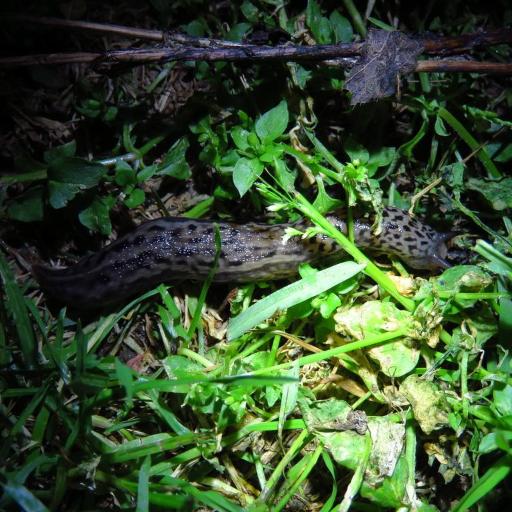
Known as the Leopard Slug or the "Great Gray Slug," this is the undisputed giant of the garden floor. While many see slugs as mere garden pests, the Leopard Slug is a sophisticated traveler with a striking coat and a surprisingly helpful diet. In many cultures, they are seen as the "wolves" of the undergrowth because they are fast, territorial, and fiercely predatory toward other slug species.
🔍 How to Identify
- 🐆 The Coat: They are easily recognized by their "leopard" pattern—dark spots on the front part (the mantle) and long, dark stripes running down the rest of the body.
- 📏 The Size: This is one of the largest slugs in the world, capable of stretching out to nearly 8 inches (20 cm) in length.
- 🛶 The Keel: If you look closely at the tail, you’ll notice a raised ridge or "keel" running down the center, giving them a slightly more aerodynamic shape than common garden slugs.
🌲 Habitat & Ecology
- 🥗 A Useful Predator: Unlike most slugs that only eat your prize hostas, the Leopard Slug is a detritivore and a hunter. It prefers rotting organic matter and fungi, but it will also actively hunt and eat other, more "destructive" slugs.
- 🌙 Nighttime Navigator: They are strictly nocturnal and possess a "homing instinct." They often return to the exact same damp crevice or log pile every single morning after their nightly patrol.
- 🪵 Damp Havens: You will most likely find them under old logs, in compost heaps, or tucked into the cool crevices of stone walls where moisture is trapped.
⚠️ Safety & Toxicity
- 🧼 Non-Toxic but Messy: Leopard Slugs are not poisonous to touch, but they produce a thick, sticky mucus that is incredibly difficult to wash off.
- 🦠 Hygiene Warning: Like all slugs and snails, they can carry parasites such as rat lungworm. Always wash your hands thoroughly if you handle one, and ensure curious pets do not try to eat them, as this can lead to lungworm infections in dogs.
- 🌱 Garden Friend: In most cases, these should be left alone. They do very little damage to living plants compared to the benefits they provide by eating decaying matter and invasive slug species.
✨ Fun Fact
The Leopard Slug has one of the most spectacular mating rituals in the animal kingdom. A pair will climb high into a tree or onto a wall, secret a thick "bungee cord" of slime, and lower themselves into mid-air to entwine and mate while dangling precariously!
More Details








