Info
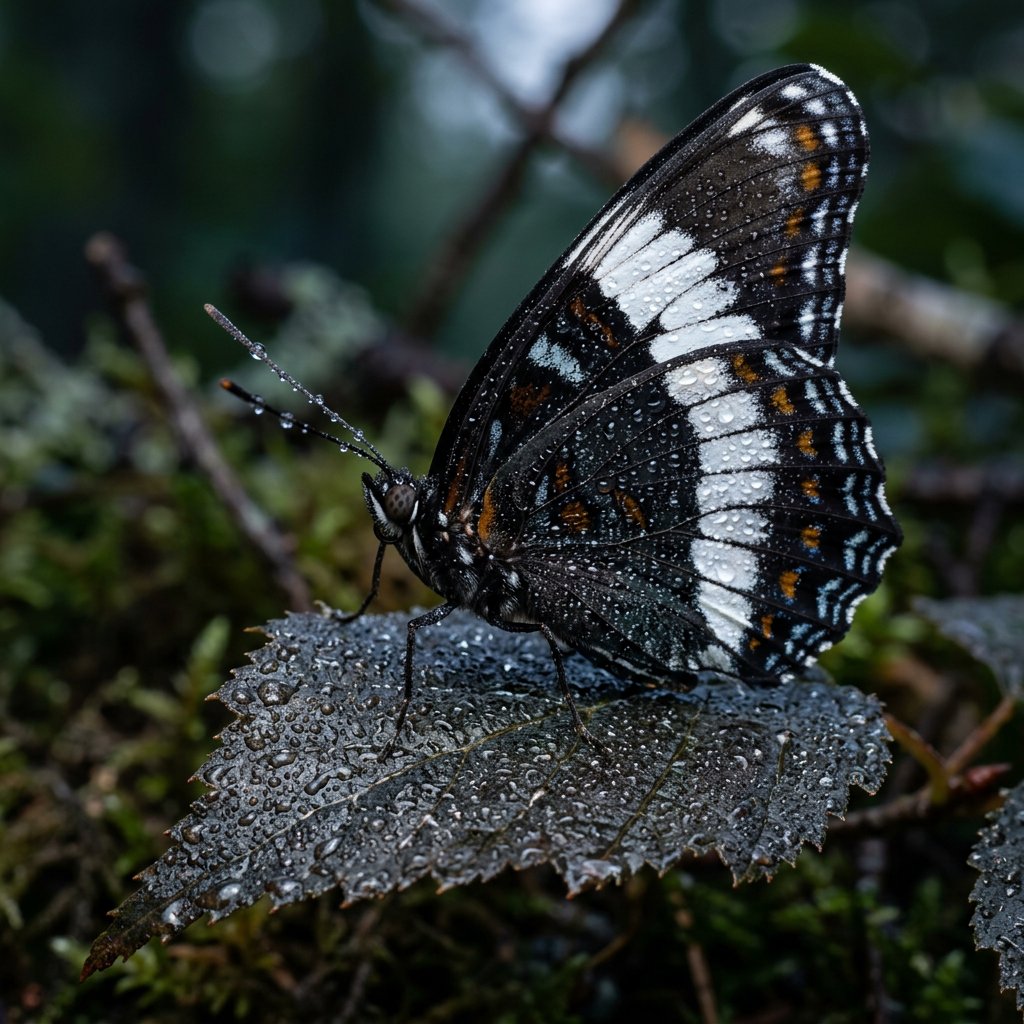
The Limenitis arthemis is a true master of disguise with a bit of a split personality. Depending on where you live, it might appear as the bold, white-banded "White Admiral" or the iridescent, blue-black "Red-spotted Purple." This butterfly is a favorite among forest hikers for its graceful, gliding flight and its curious habit of landing on sunny paths right in front of your feet.
🔍 How to Identify
- 🦋 The Two Faces: This species exists in two primary forms. The "White Admiral" has a thick, bright white band across its wings, while the "Red-spotted Purple" lacks the band, instead showing off a shimmering blue-black sheen.
- 🎨 The "Red" Spots: If you look at the underside of the wings, you will see distinct, bright brick-red or orange spots against a dark background, which give the butterfly its name.
- 📍 Flight Pattern: It moves with a characteristic "flap-flap-glide" rhythm, often staying at shoulder height or lower as it patrols forest edges.
🌲 Habitat & Ecology
- 🌳 Forest Dwellers: Unlike many butterflies that prefer wide-open meadows, these are forest-edge specialists. They are most at home in the dappled light of deciduous woods, especially near birch, willow, or wild cherry trees.
- 🍎 A Different Diet: While they occasionally visit flowers, these butterflies have a "rugged" palate. You are more likely to find them sipping from rotting fruit, tree sap, or even damp gravel (a behavior called "puddling") to extract essential salts and minerals.
- 🌿 Host Plants: Their caterpillars are masters of camouflage, looking remarkably like bird droppings to avoid being eaten while they munch on leaves of aspen, poplar, and willow.
⚠️ Safety & Toxicity
- ✅ Harmless Beauty: The Limenitis arthemis is completely safe for humans. They do not bite, sting, or possess any chemical irritants that would harm a gardener or a curious child.
- 🐾 Pet Friendly: They are non-toxic to cats and dogs. Their erratic flight might tempt a curious pup into a game of chase, but they pose no physical threat to pets.
✨ Fun Fact
- 🎭 The Great Pretender: The "Red-spotted Purple" form is a classic example of Batesian mimicry. It evolved to look almost exactly like the Pipevine Swallowtail—a butterfly that is highly toxic to birds—tricking predators into thinking it’s a poisonous meal when it’s actually perfectly edible!
More Details








