Info
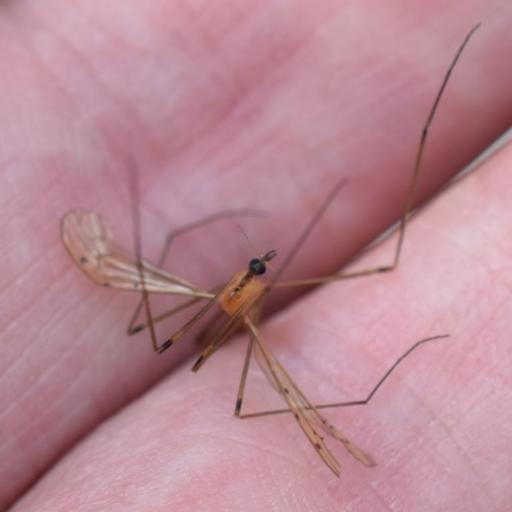
Often referred to as a "Spotted Crane Fly," Limonia phragmitidis is an elegant, long-legged insect that looks like a giant mosquito but behaves like a delicate ballerina of the wetlands. Its name is a nod to its favorite neighborhood: the common reed (Phragmites). While their large size and spindly limbs can be startling when they flutter indoors, they are gentle creatures that play a vital role in the ecosystem.
🔍 How to Identify
- 🎨 Vibrant Body: Unlike the drab gray of common crane flies, this species boasts a bright yellow to orange-brown abdomen with distinct black markings.
- 🏁 Spotted Wings: Look closely at the wings; they feature a series of dark, smoky spots along the leading edge, which helps distinguish them from their plain-winged cousins.
- 🦵 Spindly Legs: They possess extremely long, fragile legs that they often use to hang suspended from leaves or reeds.
🌲 Habitat & Ecology
- 💧 Marshland Residents: As their name suggests, they are most common in damp environments like reed beds, marshes, and riverbanks where the air is humid.
- 🧚 Clumsy Aviators: You’ll likely see them bobbing up and down in the air or clinging to vegetation. They aren't the strongest flyers, often "dancing" through tall grass.
- ♻️ Nature's Recyclers: While the adults barely eat (focusing entirely on finding a mate), their larvae live in damp soil or mud, where they help break down decaying plant matter into rich nutrients.
⚠️ Safety & Toxicity
- ✅ Friend, Not Foe: Despite their resemblance to mosquitoes, Limonia phragmitidis cannot bite. They lack the mouthparts to pierce skin and do not carry any diseases.
- 🛡️ Defensive Drops: If caught by a predator (or a curious pet), they can "drop" a leg to escape. This is a natural defense mechanism called autotomy and does not hurt the insect.
- 🐾 Pet Safety: They are entirely non-toxic to dogs and cats, though their erratic flapping might provide some harmless entertainment for a curious kitten.
✨ Fun Fact
Many people call crane flies "Mosquito Hawks" under the mistaken belief that they eat mosquitoes. In reality, adult crane flies like Limonia phragmitidis mostly drink nectar or nothing at all—their only job is to look for love!
More Details








