Info
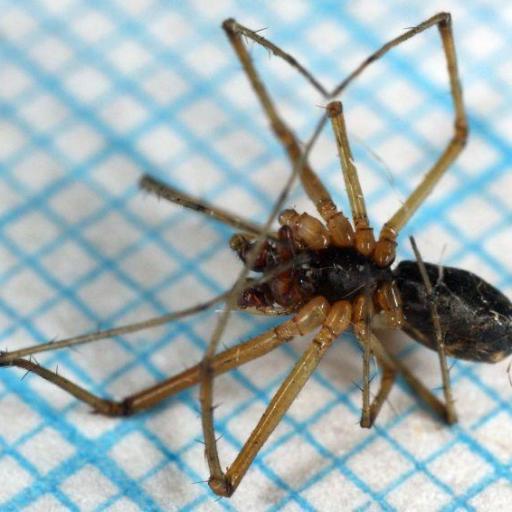
Known commonly as the European Sheet-weaver or the Triangle Sheet-spider, this tiny architect is the master behind the shimmering "hammock" webs found in gardens every autumn. While its name sounds like a geometry lesson, it actually refers to the distinct serrated pattern on its back. This spider is a gardener's best friend, acting as a silent, eight-legged pest control unit during the late summer months.
🔍 How to Identify
- 🍴 The "Tuning Fork": The most reliable marker is a dark, fork-like symbol (resembling a tuning fork or a pitchfork) located right on the center of its "head" area (the cephalothorax).
- 📐 Triangular Pattern: Its pale, oval abdomen features a dark, brown-to-black serrated stripe down the middle that looks like a series of connected triangles or zig-zags.
- 🕸️ The Horizontal Sheet: Unlike the circular "wheel" webs of garden spiders, Linyphia triangularis builds a flat, horizontal sheet web with a chaotic tangle of "tripwires" suspended above it.
🌲 Habitat & Ecology
- 🌿 Bush Dweller: You will most likely find them in low-growing bushes, gorse, or tall grass. They prefer the "edges" of things—the edge of a forest, the edge of a garden path, or the gaps in a hedgerow.
- 🕷️ Upside-Down Hunter: This spider spends almost its entire life hanging upside down underneath its horizontal sheet. When an insect flies into the "tripwires" above, it falls onto the sheet, and the spider bites it through the silk from below.
- 🍂 Seasonal Peak: While they are around most of the year, they become highly visible in August and September when the adults reach full size and their webs are coated in morning dew.
⚠️ Safety & Toxicity
- 🟢 Status: Completely harmless to humans and pets.
- 🤏 Details: Like almost all spiders, they do possess venom to subdue their tiny prey (flies and aphids), but their fangs are far too small and weak to pierce human skin. They are shy creatures that would much rather drop to the ground and hide than confront a "giant" like you.
✨ Fun Fact
When a male Linyphia triangularis finds a female’s web, he doesn’t just move in. He will often help the female "clean" the web by removing old debris or even tearing down parts of it to reduce its size, ensuring that other rival males have a harder time finding her!
More Details








