Info
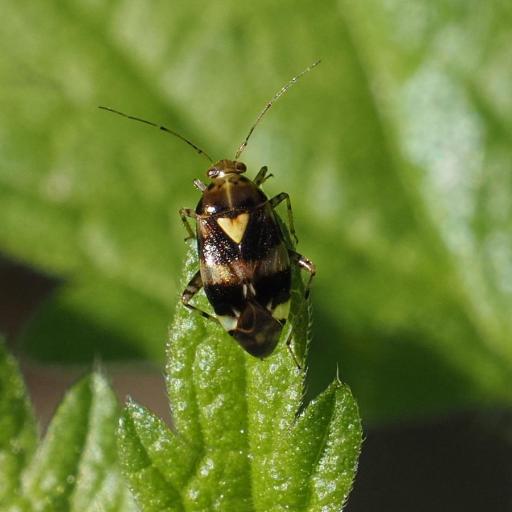
Commonly known as the Common Nettle Bug, this striking little hemipteran is a master of the undergrowth. Often found clinging to the underside of stinging nettle leaves, it is a common sight in gardens and wild patches across Europe and North Africa. While it belongs to the "true bug" family, it’s far more of a peaceful sap-sipper than a garden villain.
🔍 How to Identify
- 🛡️ The Wing Pattern: Adults typically sport a dark chocolate brown or black base, decorated with three distinct orange or creamy-yellow spots on the tips of their wing membranes.
- 🎨 The Scutellum: Look for the characteristic triangular "shield" on its back; it is usually a bright, contrasting yellowish-orange, often looking like a tiny glowing badge.
- 🦵 Leggy Details: Their legs are relatively long, slender, and often feature dark banding, which helps them blend into the shadows of dense foliage.
🌿 Habitat & Ecology
- 🌱 Nettle Specialist: As the name suggests, this bug is almost exclusively found on stinging nettles (Urtica dioica). It feeds by piercing the plant tissues—specifically the flower buds and developing seeds—to drink nutrient-rich sap.
- 🔄 Color Chameleons: When they first emerge from winter hibernation in the spring, these bugs are surprisingly pale and greenish. As they feed and mature throughout the summer, their colors darken into the rich, polished browns and oranges seen in late summer.
- 🐞 Biodiversity Indicator: Having these in your garden is a sign of a healthy micro-ecosystem. They provide a vital food source for birds and spiders without damaging your prized ornamental flowers.
⚠️ Safety & Toxicity
- 🟢 Harmless: The Common Nettle Bug is completely harmless to humans. It does not possess a stinger and lacks the mouthparts required to bite people or pets.
- 🌿 Secondary Risks: The only real danger associated with this insect is its home! Because they love stinging nettles, you are much more likely to get a "nettle sting" from the plant itself while trying to get a closer look at the bug.
- 🐾 Pet Safe: They are non-toxic and pose no threat to curious cats or dogs who might go sniffing through the weeds.
✨ Fun Fact
The Common Nettle Bug is a master of the "drop and hide" defense. If it senses a predator (or a curious gardener) approaching, it will often tuck its legs in and free-fall into the leaf litter below, becoming nearly impossible to find among the debris.
More Details








