Info
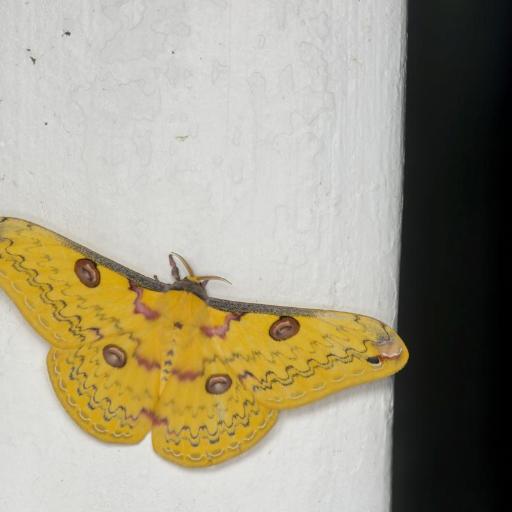
Known as the Golden Emperor Moth, the Loepa is a living masterpiece that looks as if it were dipped in molten gold. These stunning members of the Saturniidae family are often mistaken for butterflies due to their vibrant, sun-drenched colors, but they are actually nocturnal treasures of the Asian forest. In many cultures, their appearance is seen as a symbol of fleeting beauty and royal elegance.
🔍 How to Identify
- 🎨 Vibrant Coloration: The most striking feature is the brilliant, saturated yellow wings, which are often decorated with delicate wavy lines of pink, charcoal, or chocolate brown.
- 👁️ Translucent Eyespots: Each of the four wings features a prominent "eyespot" (ocellus). These look like small windows or "eyes" designed to startle predators by mimicking a much larger animal.
- 🎭 Plumed Antennae: Males possess large, feathery, comb-like antennae. These are highly sensitive organs used to "sniff out" female pheromones from incredible distances through the night air.
🌲 Habitat & Ecology
- 🍃 Forest Dwellers: These moths are native to the humid deciduous forests of Southeast Asia, ranging from India to China. They prefer areas with plenty of host plants like wild grapevines or oak trees.
- 🌙 The Short Life: As adults, Loepa moths are ephemeral. They emerge from their cocoons with one goal: reproduction. Because they lack functioning mouthparts, they cannot eat and must rely entirely on energy stored from their time as a caterpillar.
⚠️ Safety & Toxicity
- 🦋 Gentle Giants: The adult Golden Emperor Moth is completely harmless to humans. They do not bite or sting, and they do not possess any chemical defenses that are dangerous to touch.
- 🐛 Caterpillar Caution: While the adult moth is safe, the larvae (caterpillars) are covered in bristly spines. While not deadly, these hairs can cause a "stinging" sensation or itchy rash if they brush against sensitive skin.
✨ Fun Fact
The adult Loepa moth lives its entire life on "fast forward." Because they cannot eat, they typically live for only 7 to 10 days, making every moment of their golden flight a race against time to find a mate.
More Details








