Info
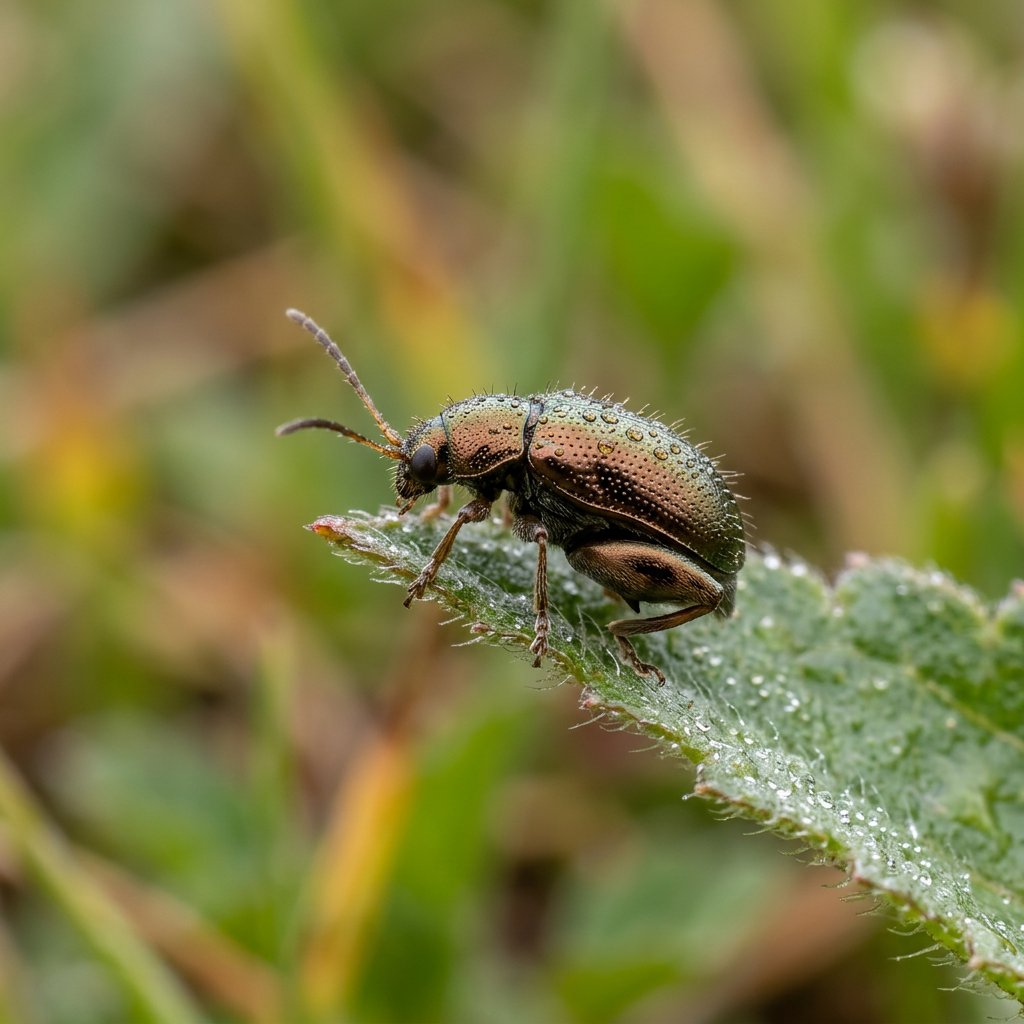
Known as the "Olympic jumpers" of the beetle world, the Longitarsus genus consists of tiny, energetic flea beetles often found hitching a ride on garden wildflowers. Their name literally translates to "long foot," referencing the specialized anatomy that allows them to catapult away from danger at incredible speeds. While they might look like tiny specks of dust to the naked eye, a closer look reveals a highly specialized survivor.
🔍 How to Identify
- 🦶 The "Long Toe": Their most defining feature is an exceptionally long first segment on the hind feet (tarsi), which acts as a lever for high-speed takeoffs.
- 🦵 Powerful Thighs: Like all flea beetles, they possess greatly enlarged hind femurs (thighs) packed with spring-like muscles designed for jumping rather than walking.
- 📏 Micro-Size: These beetles are remarkably small, typically measuring only 1.5mm to 4mm in length, with bodies that are often oval or teardrop-shaped.
- 🎨 Variable Colors: Depending on the species, they can range from a subtle, straw-colored yellow to a deep, metallic bronze or shiny black.
🌲 Habitat & Ecology
- 🍽️ Picky Eaters: Most Longitarsus species are "host-specific," meaning they only feed on certain plant families. You are most likely to find them on Forget-me-nots (Boraginaceae), Mints (Lamiaceae), or Ragworts.
- 🕳️ Shothole Damage: Their feeding style is distinctive; they chew tiny, circular holes through the leaves, creating a pattern that looks like the plant was hit by miniature birdshot.
- 🛡️ The Vanishing Act: They are incredibly sensitive to changes in light and vibration. If you approach them, they don't fly away—they "teleport" by snapping their hind legs, vanishing from sight in milliseconds.
⚠️ Safety & Toxicity
- ✅ Harmless to Humans: These beetles are completely "friendly" neighbors. they do not bite, sting, or carry any toxins that affect humans or household pets.
- 🌱 Garden Health: While they are technically "pests," they rarely cause enough damage to kill a mature plant. They are generally considered a minor cosmetic nuisance rather than a threat to the garden's survival.
✨ Fun Fact
The jumping mechanism in a flea beetle's leg is so powerful that it releases energy faster than a muscle can physically contract. It works like a cocked mousetrap, using a specialized "spring" made of a protein called resilin to launch the beetle hundreds of times its own body length!
More Details








