Info
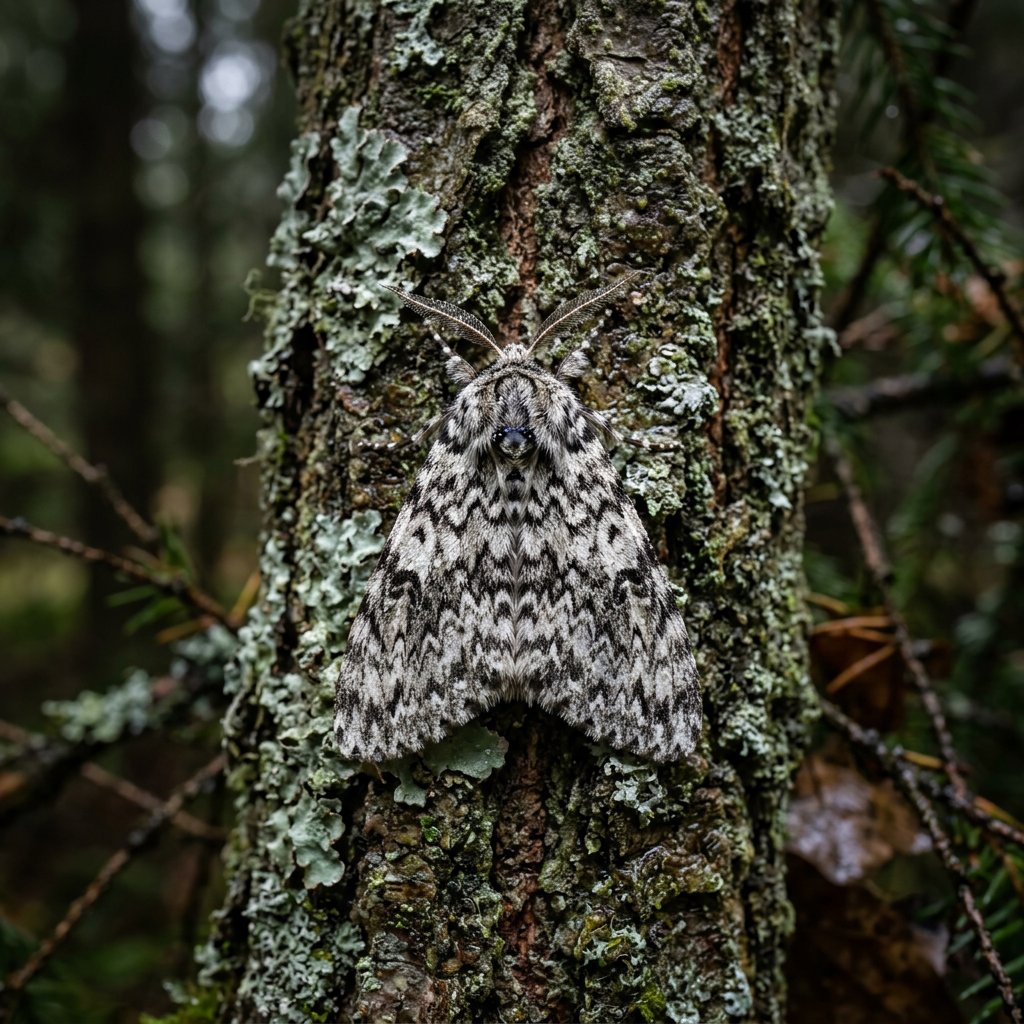
Meet the Black Arches, or the Nun Moth—a small insect with a massive reputation in the forests of Europe and Asia. Often called the "Nun" due to its stark black-and-white wing patterns reminiscent of traditional religious habits, this moth is a master of camouflage against birch bark and lichen. While the adult is delicate and ghostly, it is well-known to foresters as a formidable "foe" because of its caterpillar's incredible appetite for timber.
🔍 How to Identify
- 🦋 Wing Pattern: The forewings are snowy white, decorated with a complex series of black zigzag lines and dark spots that look like ink splatters.
- 🧶 The Abdomen: If you catch a glimpse beneath the wings, the body is often a surprising dull pink or reddish-orange with black bands.
- 🎭 Resting Posture: Unlike some moths that spread their wings flat, the Black Arches folds its wings into a steep, roof-like shape, helping it disappear against tree trunks.
🌲 Habitat & Ecology
- 🍽️ Forest Diet: This moth is a "conifer specialist." The larvae have a particular love for Spruce and Pine needles, though they will happily move onto Beech or Oak if their favorite trees are unavailable.
- 🌳 The Defoliator: In the wild, this species is famous for "outbreaks." During these times, millions of caterpillars can strip entire sections of a forest bare, leaving trees vulnerable to disease or death.
⚠️ Safety & Toxicity
- 🟢 Harmless Adults: As an adult moth, the Black Arches is completely harmless to humans. It has no stinger and does not bite.
- 🐛 Caterpillar Hairs: Like many furry caterpillars, the larvae are covered in fine hairs. While they aren't "deadly," touching them can cause mild skin irritation or an itchy rash in sensitive individuals and curious pets.
✨ Fun Fact
The "Nun" moth is so efficient at eating that a single caterpillar can consume or damage about 1,000 pine needles during its short development cycle!
More Details








