Info
While often found gliding alongside water beetles and dragonflies, Lymnaea stagnalis is actually the Great Pond Snail, a fascinating gastropod rather than an insect. This "giant" of the freshwater world is a prehistoric-looking scavenger that plays the role of a dedicated janitor in still waters. With its sleek, pointed spire, it is often nicknamed the "Ear Snail" due to the unique shape of its sensory tentacles.
🔍 How to Identify
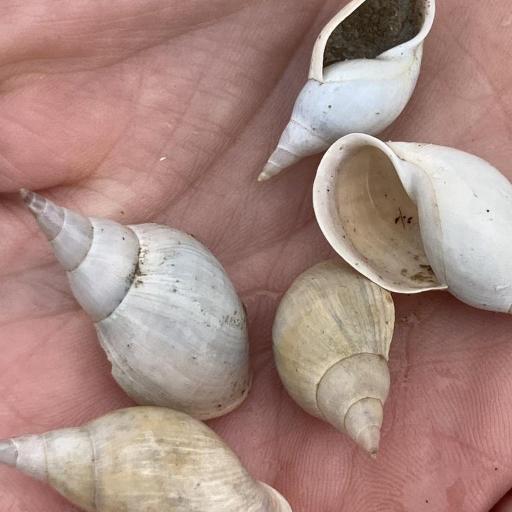
- 🐚 The Spire: It features a large, elegant, light-brown shell that tapers into a very sharp, thin point. It can reach up to 6 cm in length, making it one of the largest freshwater snails in its range.
- 👂 Triangular Tentacles: Unlike garden snails with long "stalk" eyes, this snail has two broad, flat, triangular tentacles at its base that look remarkably like cat or Yoda ears.
- 🌀 Right-Handed Opening: When held with the tip pointing up, the shell opening (aperture) is located on the right side, a trait known as being "dextral."
🌊 Habitat & Ecology
- 💧 The "Scuba" Lung: Despite living underwater, this snail is a "pulmonate," meaning it breathes air. You will often see it glide to the surface to open its breathing hole (pneumostome) and take a fresh gulp of oxygen.
- 🍽️ Nature’s Recycler: It is an omnivorous scavenger. It spends its days rasping away at algae on rocks, eating decaying leaf litter, and occasionally consuming small water creatures or carrion to keep the pond floor clean.
⚠️ Safety & Toxicity
- 🐌 Safe to Observe: These snails are completely harmless to humans. they do not bite, sting, or produce any toxins.
- 🦠 Parasite Precaution: Like many freshwater mollusks, they can act as intermediate hosts for certain microscopic trematodes (flatworms). It is always best practice to wash your hands thoroughly after touching pond water or wild snails.
- 🐠 Aquarium Note: While great cleaners, they are prolific breeders and can quickly take over a home fish tank if there is too much leftover food available.
✨ Fun Fact
🧠 A Brainy Snail: This species is a superstar in the world of neuroscience! Because they have exceptionally large and relatively few neurons, scientists use them to study the fundamental ways that brains learn and store memories.
More Details








