Info
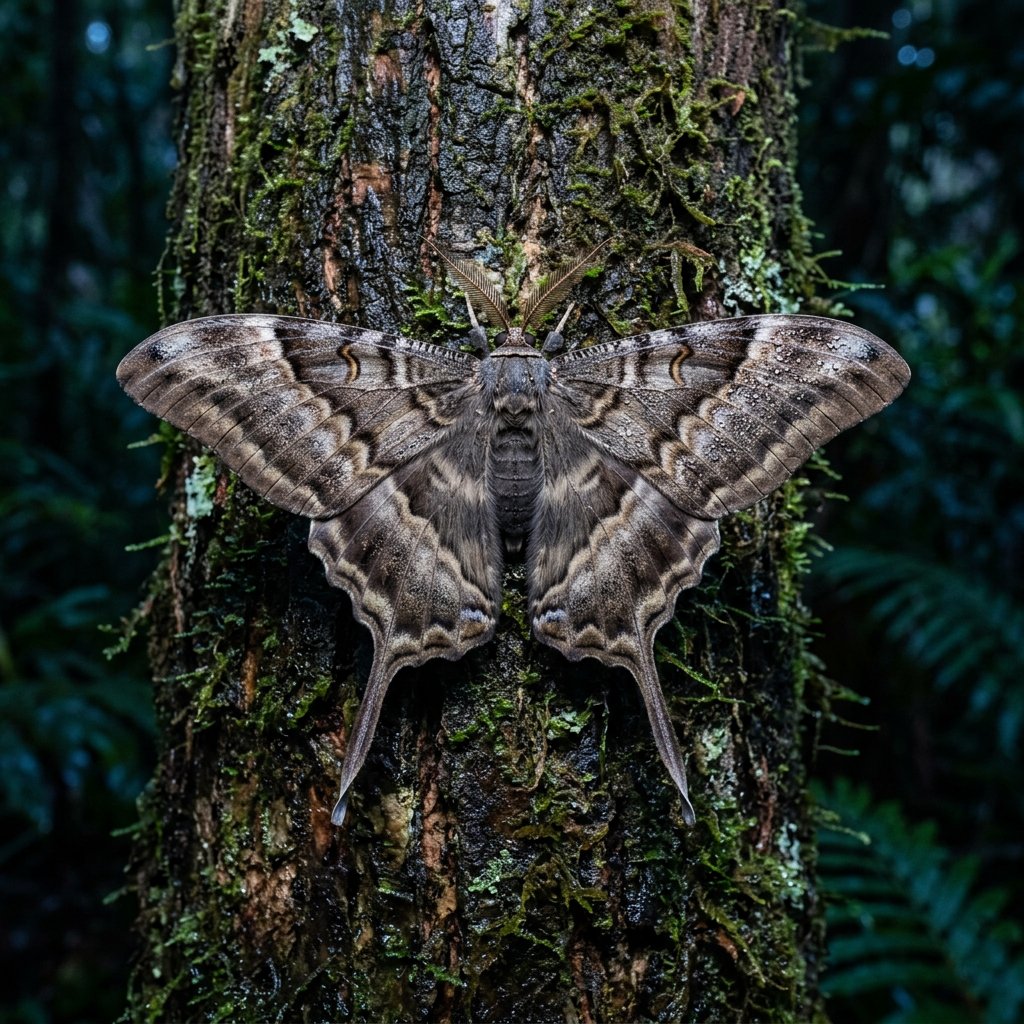
Often mistaken for a giant butterfly, the Tropical Swallowtail Moth (Lyssa zampa) is one of Southeast Asia's most spectacular nocturnal visitors. With an elegant wingspan and long, tapering tails, it looks like a creature straight out of a fantasy novel. These gentle giants are famous for their massive, mysterious migrations, where thousands may suddenly appear in urban centers, resting on the sides of skyscrapers like living shadows.
🔍 How to Identify
- 🦋 Impressive Scale: It is one of the largest moths in the world, boasting a massive wingspan that can reach up to 16 cm (over 6 inches).
- 🦓 The Signature Stripe: The wings are a deep chocolate-brown or charcoal color, bisected by a sharp, luminous white or pale-greenish band that glows under moonlight.
- 📐 Geometric Tails: The hindwings feature long, elegant "swallowtails" tipped with white, which break up the moth's silhouette and help it evade birds during flight.
🌲 Habitat & Ecology
- 💡 Light Seekers: While they primarily inhabit lowland and montane forests, they are famously attracted to bright artificial lights. During "outbreak" years, they are commonly found resting on white walls or under streetlamps in cities.
- 🌿 Specific Diet: As caterpillars, they are picky eaters, feeding almost exclusively on the leaves of Endospermum trees. As adults, they serve as important nocturnal pollinators and a high-protein snack for bats and owls.
⚠️ Safety & Toxicity
- ✅ Harmless Giant: The Tropical Swallowtail Moth is completely harmless to humans. They do not possess a stinger, they do not bite, and they are not known to be toxic.
- 👐 Handle with Care: While safe for pets and children, their wings are covered in extremely delicate scales. Touching them can rub off these scales, which may hinder their flight or camouflage, so it is always best to observe these "ghosts of the forest" from a short distance.
✨ Fun Fact
In some regions, the sudden mass appearance of thousands of these moths was once feared as a supernatural omen. Today, we know these "population booms" are actually triggered by specific weather patterns and the synchronized growth of their host plants!
More Details








