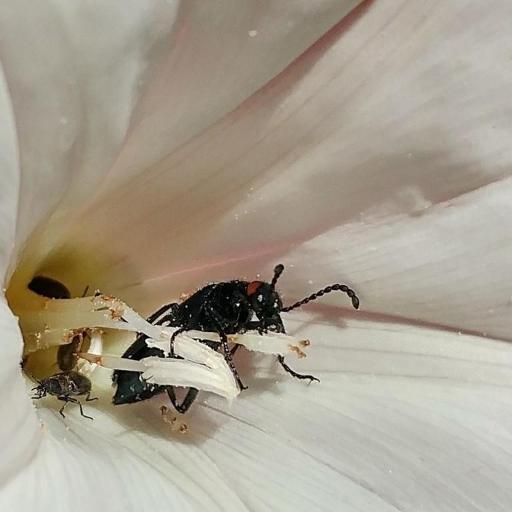
Info
The Eared Blister Beetle is a shimmering, emerald-hued traveler of the desert Southwest. Often mistaken for a harmless jewel beetle due to its metallic luster, this insect carries a secret chemical defense that demands respect. While they are fascinating to observe as they congregate on desert blooms, they are best admired from a distance.
🔍 How to Identify
- 🎨 Iridescent Armor: They possess a striking metallic green or bluish-green body that glimmers intensely under the bright desert sun.
- 👂 The "Ears": Their name comes from the distinctively flared or "auriculate" shape of the back of the head, which gives them a slightly wide-headed appearance.
- 🪶 Soft Shells: Unlike many beetles with hard, armor-like shells, their wing covers (elytra) are relatively soft and flexible.
🌲 Habitat & Ecology
- 🌵 Arid Lovers: You will typically find these beetles in the arid scrublands of the Southwestern United States and Northern Mexico, particularly when wildflowers are in bloom.
- 🐝 The Great Hitchhiker: Their larvae are "cleptoparasites." They often wait on flowers to hitch a ride on native bees, eventually sneaking into the bee's nest to feast on its eggs and stored pollen.
- 🍽️ Flower Feeders: As adults, they are primarily herbivores, congregating in large numbers to munch on the petals and foliage of plants like brittlebush and various legumes.
⚠️ Safety & Toxicity
- 🧪 Chemical Defense: This insect produces a potent blistering agent called cantharidin. If the beetle feels threatened or is crushed, it "reflex bleeds" this toxin from its joints.
- 🖐️ Skin Irritation: Contact with cantharidin causes painful, fluid-filled blisters on human skin. Never pick one up with your bare hands.
- 🐾 Pet Warning: These beetles are highly toxic if ingested. They are a particular concern for livestock (like horses) if they accidentally get crushed into hay during harvest.
✨ Fun Fact
The chemical these beetles produce, cantharidin, is the same substance found in the infamous "Spanish Fly." While historically used in folk medicine, it is actually a powerful poison that can be fatal if swallowed!
More Details








