Info
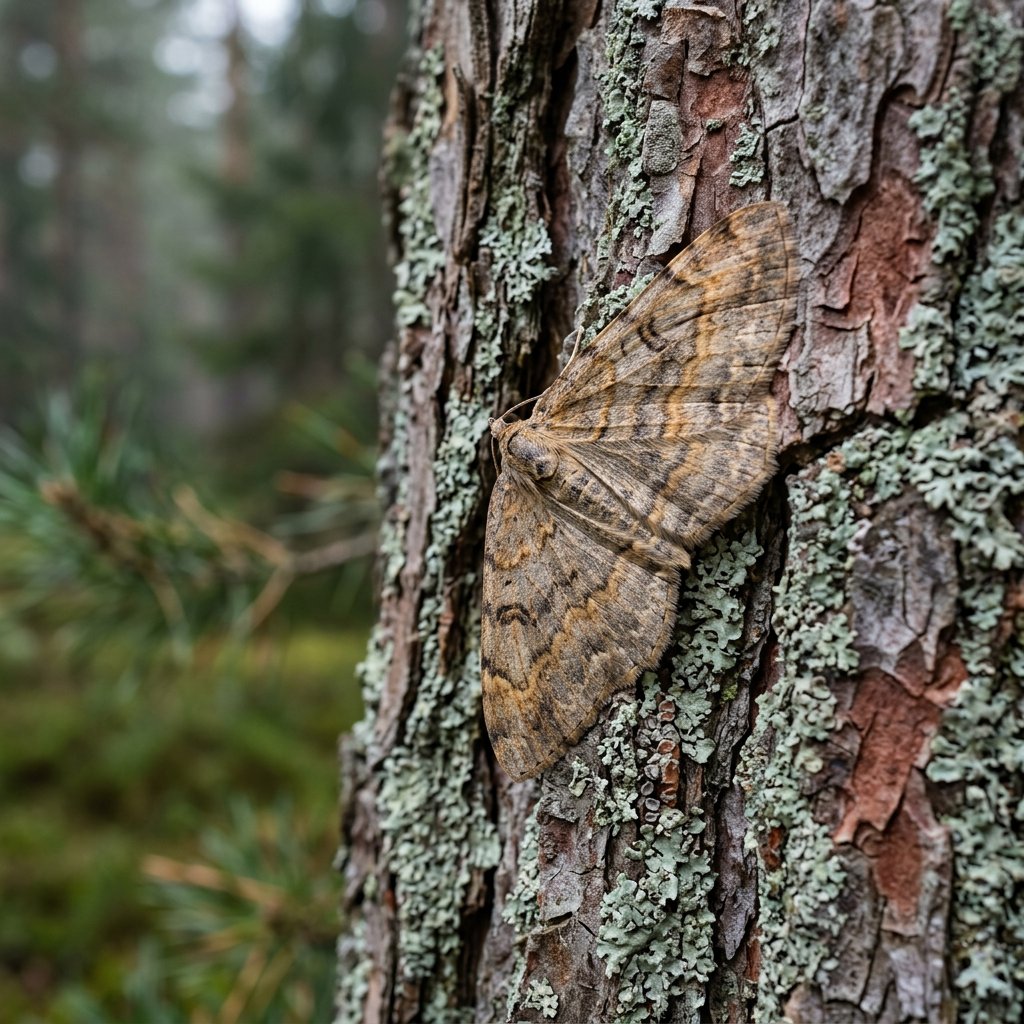
Often called the Tawny-barred Angle, this moth is a master of camouflage within the coniferous forests of Europe and Asia. Its geometric patterns and subtle color palette make it look like a piece of lichen or a dried needle, helping it vanish against the bark of pine trees during the day. It belongs to the "Geometer" family, meaning its caterpillars are the charming "inchworms" we often see looping across branches.
🔍 How to Identify
- 📐 Angular Wings: Unlike many rounded moths, the forewings have a sharp, notched "angle" or "hook" on the outer edge, giving the species its common name.
- 🎨 Tawny Markings: The wings are primarily a soft purplish-grey, but they are defined by a distinct orange-brown (tawny) band or smudge near the wing tip.
- 🦋 Stealthy Posture: When resting on a trunk, it holds its wings flat and slightly spread, perfectly breaking up its silhouette against the texture of tree bark.
🌲 Habitat & Ecology
- 🌲 Conifer Specialist: You are most likely to spot this moth near Scots Pine, Larch, or Spruce trees. Its entire life cycle is tied to these evergreens, as the larvae rely on needles for food.
- 🌙 Night Life: While it is a nocturnal flier that is easily attracted to porch lights or garden lanterns, it can sometimes be disturbed from its resting spot on a tree trunk during a walk through the woods.
⚠️ Safety & Toxicity
- ✅ Harmless: The Tawny-barred Angle is a "friend" of the garden. It does not bite, sting, or possess any chemical defenses that could harm humans.
- 🐾 Pet Safe: It is non-toxic to curious cats and dogs. While a pet might try to catch one, the moth is entirely edible and poses no threat to their health.
✨ Fun Fact
- ✨ The Great Mimic: To avoid being eaten by birds, the caterpillar of this moth is bright green with white longitudinal stripes, allowing it to blend in perfectly with a cluster of pine needles. Even the most keen-eyed predator has trouble spotting them!
More Details








