Info
Known for their dramatic subterranean lifestyle, the Magicicada cassinii is a marvel of the biological clock. These "17-year cicadas" spend nearly two decades living in the dark, only to emerge in a synchronized explosion of life that blankets the landscape. Often called the Cassini Periodical Cicada, they are the smaller, louder cousins of the 17-year family, famous for their "screaming" choruses that can be heard from blocks away.
🔍 How to Identify
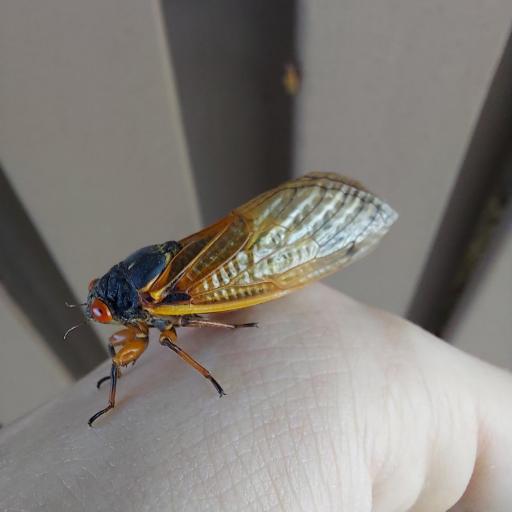
- 🔴 The Eyes: They possess striking, bulging red eyes that give them an almost extraterrestrial appearance against their dark bodies.
- ⚫ The Body: Unlike some of its relatives, the Cassinii has a solid black abdomen on the underside, lacking the broad orange stripes found on the M. septendecim.
- 🧡 The Wings: Their wings are clear and membrane-like, supported by a delicate network of bright orange or amber-colored veins.
- 📏 The Size: They are relatively small for cicadas, typically measuring about 1 to 1.5 inches in length, making them the "compact" version of the periodical brood.
🌲 Habitat & Ecology
- 🌳 The Tree Connection: These insects spend 17 years as "nymphs" underground, sipping sap from the roots of deciduous trees like Oak, Maple, and Hickory. When the soil reaches exactly 64°F (18°C), they tunnel upward in a massive, coordinated breakout.
- 🎶 The Wall of Sound: Male Cassinii are known for their synchronous chorusing. Instead of individual buzzing, they fly and "sing" in rhythmic waves, creating a high-pitched, whirring sound that swells and fades in unison to attract females.
- 🍂 Nature's Fertilizer: After their frantic few weeks of mating, the adults die off, providing a massive nutrient boost to the forest floor. Their emergence effectively "overwhelms" predators—there are simply too many cicadas for birds and squirrels to eat them all!
⚠️ Safety & Toxicity
- ✅ Status: Completely Harmless.
- 🛡️ Details: Despite their "scary" red eyes and loud noise, they do not bite, sting, or carry diseases. They are clumsy fliers and might land on you, but they are just looking for a tree. While safe for pets to eat in small amounts, the crunchy exoskeletons can cause an upset stomach if a dog overindulges during a "cicada feast."
✨ Fun Fact
The 17-year cycle is a brilliant evolutionary "math" trick. By emerging in a prime-number interval, it makes it nearly impossible for predator populations (like birds or wasps) to sync their own life cycles to the cicadas' appearance!
More Details








