Info
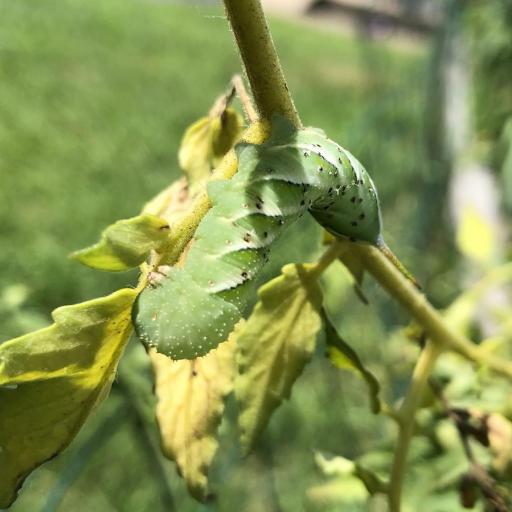
Known to gardeners as the formidable "Tobacco Hornworm," Manduca sexta is more than just a pest—it is a master of camouflage and a scientific marvel. While it looks like a fearsome creature from a miniature jungle, this bright green caterpillar eventually transforms into the elegant Carolina Sphinx Moth, a massive, hovering pollinator often mistaken for a hummingbird.
🔍 How to Identify
- 🐛 The "Horn": A prominent, curved red or dark spike sits on the tail end. Despite looking like a stinger, it is actually soft and completely harmless.
- 🎨 Camouflage Stripes: Its body features seven distinct diagonal white stripes that mimic the veins of a leaf, helping it vanish against the stems of its host plants.
- 👁️ Side Spots: A row of small, black-and-white circular openings called "spiracles" run along its sides; these are the breathing holes the insect uses to take in oxygen.
🌲 Habitat & Ecology
- 🍅 Garden Glutton: These insects are specialists that thrive in backyard gardens and agricultural fields, feeding almost exclusively on the Solanaceae (Nightshade) family, including tomatoes, peppers, and tobacco.
- 🦇 The Night Shift: As an adult moth, Manduca sexta is nocturnal. It uses its incredibly long tongue (proboscis) to drink nectar from deep, pale flowers that bloom at dusk, acting as a vital pollinator for many desert and garden species.
⚠️ Safety & Toxicity
- 🟢 Non-Aggressive: Tobacco hornworms do not sting, bite, or carry venom. They are perfectly safe for curious children or hobbyists to handle, though they may wiggle or regurgitate a bit of green "juice" as a defense.
- 🧪 Chemical Defense: Because they eat tobacco and nightshades, they accumulate toxins in their bodies. While not dangerous to touch, they can be toxic if eaten by birds or small pets, as they store the host plant's chemicals for protection.
✨ Fun Fact
Manduca sexta is a biological "super-machine." It can consume tobacco leaves containing enough nicotine to kill almost any other creature on Earth. It survives by quickly pumping the nicotine out of its system and even "exhaling" it through its skin to ward off potential predators!
More Details








