Info
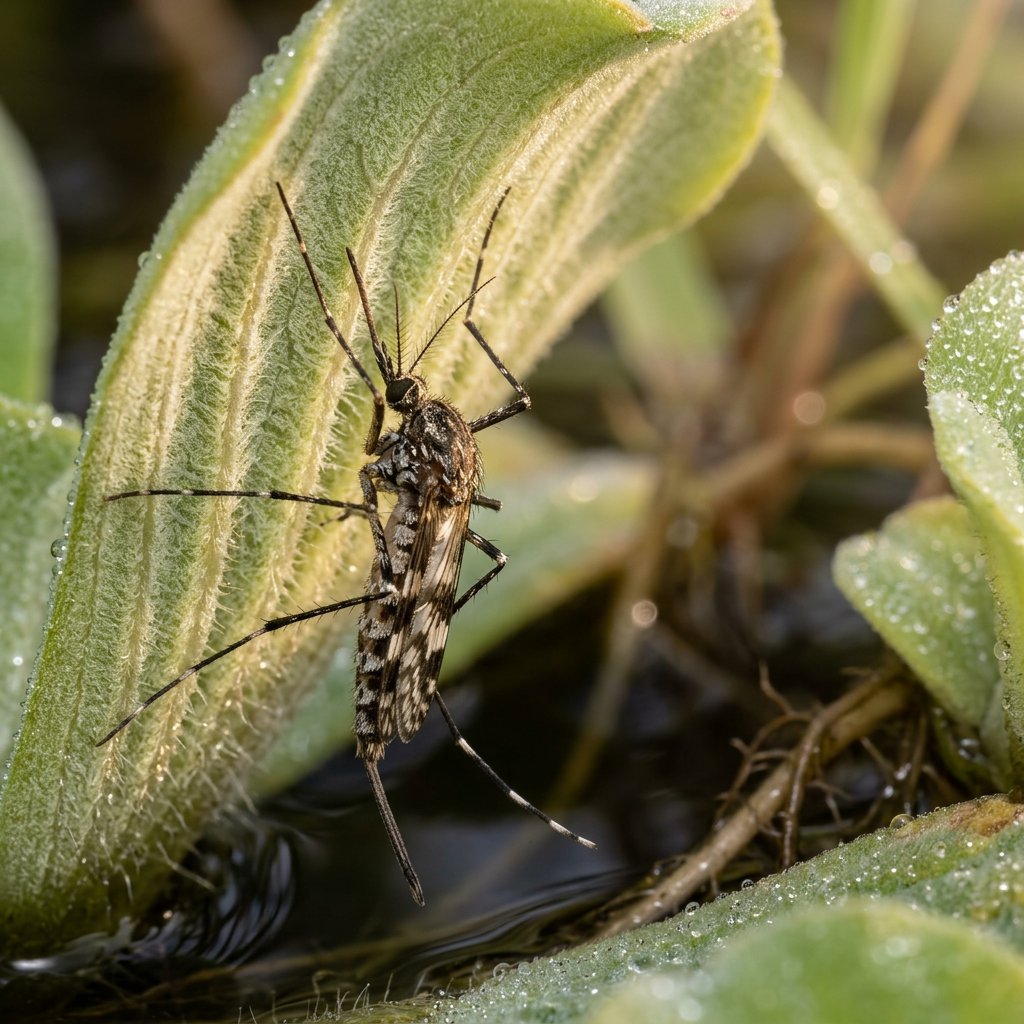
Often called the "Shaggy Mosquito," Mansonia titillans is a fascinating yet pesky inhabitant of tropical and subtropical wetlands. Known for its distinctively mottled appearance, this mosquito is far more than just a summer nuisance; it is an evolutionary specialist with a "scuba-diving" secret. Throughout the Americas, it is recognized for its aggressive biting habits and its unique, parasitic relationship with floating aquatic vegetation.
🔍 How to Identify
- 🦟 Wing Pattern: Its wings are heavily "mottled" or salt-and-peppered, covered in broad, asymmetrical scales that give the insect a dusty, shaggy appearance.
- 🦓 Banded Legs: Look for prominent white bands on the dark legs, which help distinguish it from more uniform-looking house mosquitoes.
- 📐 Robust Body: Compared to the delicate frame of other species, Mansonia has a sturdier, somewhat "hunched" posture when resting on a surface.
🌲 Habitat & Ecology
- 🌿 The Plant Snorkel: Unlike most mosquito larvae that breathe air at the water's surface, Mansonia larvae are "underwater snorkelers." They use a specialized, saw-like breathing tube to pierce the roots of floating plants (like Water Hyacinth) to steal oxygen directly from the plant tissue.
- 💧 Stagnant Sanctuaries: They are most common in permanent freshwater swamps, lakes, and slow-moving canals where thick mats of floating vegetation provide them with both a home and an air supply.
⚠️ Safety & Toxicity
- 🩸 Aggressive Biters: The females are persistent and painful biters. They are most active at dusk and dawn but are known to be quite bold, often venturing into shaded areas during the day to find a meal.
- 🦠 Health Risks: While they don't carry malaria, they are known vectors for Venezuelan Equine Encephalitis (VEE) and certain types of lymphatic filariasis. Protect yourself with repellent and long sleeves when in swampy areas.
✨ Fun Fact
🧪 The Oxygen Thief: The larvae are so dependent on their host plants that if you remove all the floating vegetation from a pond, the Mansonia larvae will actually drown; they have evolved to be so specialized that they can no longer breathe at the water's surface like other mosquitoes!
More Details








