Info
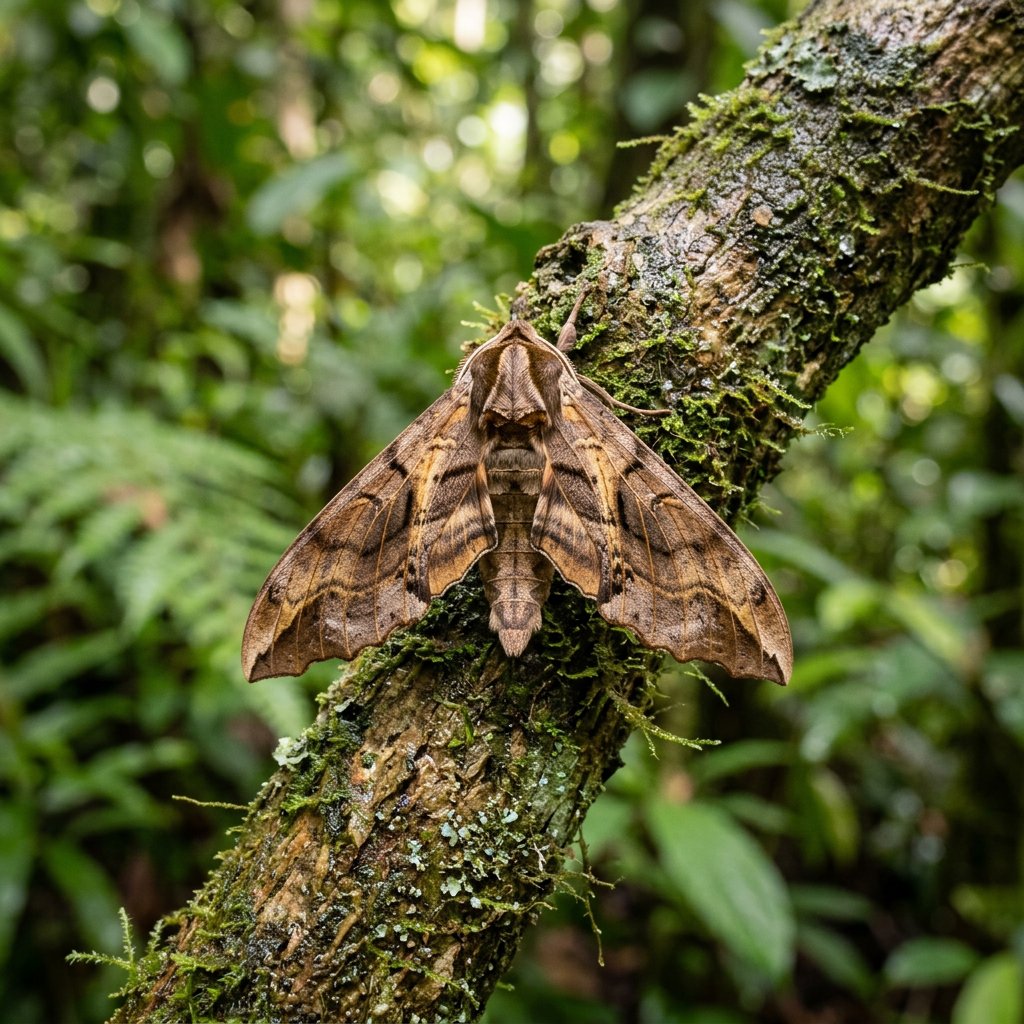
Often called the Dull Hawkmoth, Marumba dyras is a master of disguise that looks more like a crisp, autumn leaf than a living creature. Found across South and Southeast Asia, these large moths are the "gentle giants" of the night sky. While their size might be surprising, they are entirely harmless and spend their days hiding in plain sight.
🔍 How to Identify
- 🦋 Scalloped Wings: Unlike the smooth curves of most butterflies, this moth has distinctive "toothed" or jagged wing edges that perfectly break up its silhouette against tree bark.
- 🍂 Leaf Mimicry: The wings are painted in shades of tan, khaki, and woody brown, featuring delicate dark lines that mimic the veins of a dried leaf.
- 👁️ The Hindwing Secret: When tucked away, it looks like a leaf, but if startled, it may flash its hindwings to reveal small, dark spots designed to trick predators into thinking they are being watched by a larger animal.
🌲 Habitat & Ecology
- 🌙 Nocturnal Lifestyle: These moths are strictly nocturnal. During the day, they remain perfectly still on tree trunks or garden walls, relying entirely on their camouflage to avoid hungry birds.
- 🍃 Dietary Habits: As caterpillars, they are hearty eaters, favoring the leaves of trees like Hibiscus, Teak, and various fruit trees. However, as adults, they take a very different approach to life (see the Fun Fact below!).
- 💡 Light Seekers: Like many of their cousins, they are frequently drawn to porch lights and street lamps, which is often the only time humans get a close-up look at them.
⚠️ Safety & Toxicity
- ✅ Status: Entirely harmless to humans and pets.
- 🚫 No Sting or Bite: Despite their large size and somewhat "pointy" appearance, they do not possess a stinger, nor do they have mouthparts capable of biting.
- 🐛 Handle with Care: While the moth is safe, the caterpillars are quite large and have a "horn" at the tail end. While not venomous, handling them roughly can stress the insect, and some people may experience mild skin irritation from the tiny hairs found on many moth larvae.
✨ Fun Fact
- ✨ The Fasting Flyer: Believe it or not, the adult Marumba dyras does not eat! It possesses only vestigial mouthparts, meaning it cannot drink nectar. It must complete its entire adult mission—finding a mate and laying eggs—using only the energy it stored up when it was a caterpillar.
More Details








