Info
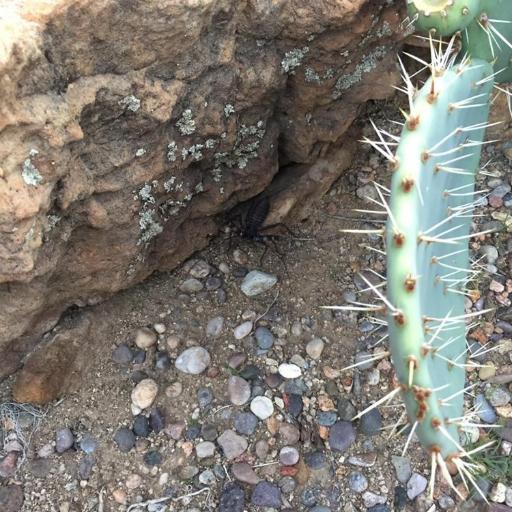
Often called the "Land Lobster" or "Grampus," the Giant Vinegaroon looks like a prehistoric survivor from a science fiction film. Despite its intimidating appearance, this heavy-set arachnid is a shy, nocturnal resident of the southwestern United States and Mexico. It is a gardener's secret ally, tirelessly hunting the pests that most people want out of their homes.
🔍 How to Identify
- 🦂 The "Whip" Tail: Unlike true scorpions, it has no stinger; instead, it sports a long, thin, wire-like tail (flagellum) used to sense vibrations and chemicals in its environment.
- 🦀 Heavy Armor: It possesses a thick, jet-black or dark chocolate exoskeleton and massive, crab-like pincers (pedipalps) used for crushing insect prey.
- 🕷️ Sensory Legs: While it has eight legs, the front pair are extremely long and thin, acting as "antennae" to feel its way through the dark rather than for walking.
🌲 Habitat & Ecology
- 🌙 Night Shift: As a nocturnal hunter, it spends its days tucked away in deep burrows or under large rocks and rotting logs to stay cool and moist.
- 🐜 Pest Controller: They are voracious predators with a diverse palate, happily snacking on cockroaches, crickets, millipedes, and even the occasional small scorpion.
⚠️ Safety & Toxicity
- 🛡️ Non-Venomous: The Giant Vinegaroon is technically harmless to humans and pets as it lacks venom glands and a stinging apparatus.
- 🥗 Acidic Defense: If threatened, it can accurately spray a mist of concentrated acetic acid (vinegar) from the base of its tail. This can cause a stinging sensation if it hits your eyes or a slight skin irritation, so it is best to observe them from a distance.
✨ Fun Fact
The "vinegar" spray this insect produces is roughly 15 times stronger than the vinegar you keep in your kitchen cupboard—it’s strong enough to dissolve the exoskeletons of other predatory insects!
More Details








