Info
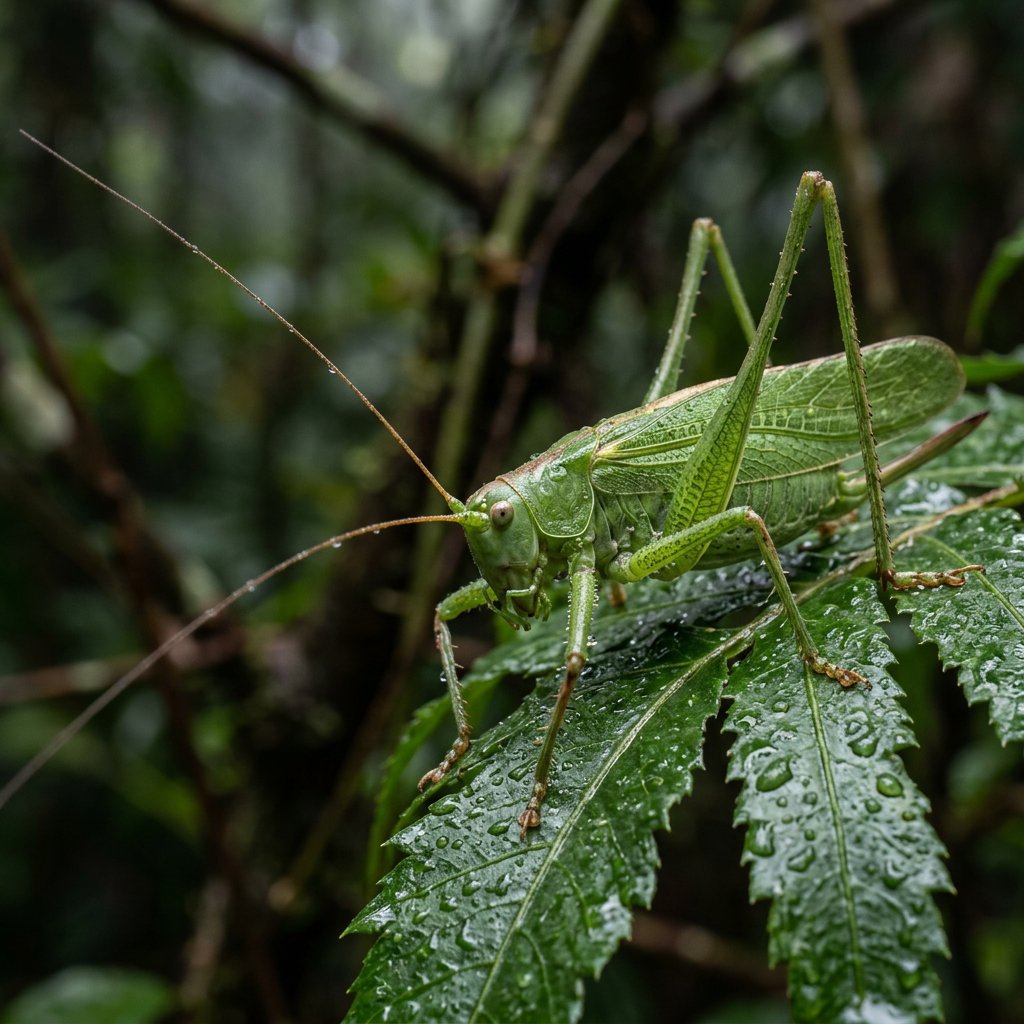
Often called the Long-winged Katydid, this master of disguise is a legendary figure in the nighttime soundscapes of Southeast Asia. It is the "Pavarotti" of the insect world, known for a loud, rhythmic, and almost mechanical song that can fill an entire garden. To the untrained eye, it is simply a stray leaf—until it suddenly springs into the air with a powerful, acrobatic leap.
🔍 How to Identify
- 🍃 Leaf Mimicry: Its forewings are broad and intricately veined, perfectly mimicking the texture and "ribs" of a green or drying leaf to vanish against foliage.
- 📏 Ultra-Long Antennae: It possesses incredibly thin, thread-like antennae that often stretch significantly longer than its entire body, acting as high-precision sensors in the dark.
- 🦵 Spiny Hind Legs: The back legs are exceptionally long and powerful, often lined with tiny, microscopic spines that provide grip when climbing vertical stems.
🌲 Habitat & Ecology
- 🎶 The Night Orchestra: Males are famous for "stridulation," which involves rubbing their wings together to create a repetitive, metallic "chee-chee-chee" sound to attract females during twilight.
- 🌿 Canopy Dwellers: While they are occasionally found in home gardens, they prefer the dense humidity of tropical forests and tall grasslands where they can blend into the undergrowth.
⚠️ Safety & Toxicity
- 🛡️ Harmless Resident: The Long-winged Katydid is not venomous and possesses no stinger. It is a peaceful herbivore that plays a vital role in the food chain.
- 👄 Defensive Pinch: While they are not aggressive, an adult has strong mandibles meant for chewing tough leaves; if handled roughly, they may deliver a small, harmless pinch as a "back-off" signal.
✨ Fun Fact
Unlike humans, these insects actually "hear" with their legs! They have specialized slit-like ears called tympana located on their front shins, which allow them to pinpoint exactly where a mating call—or a predator—is coming from.
More Details








