Info
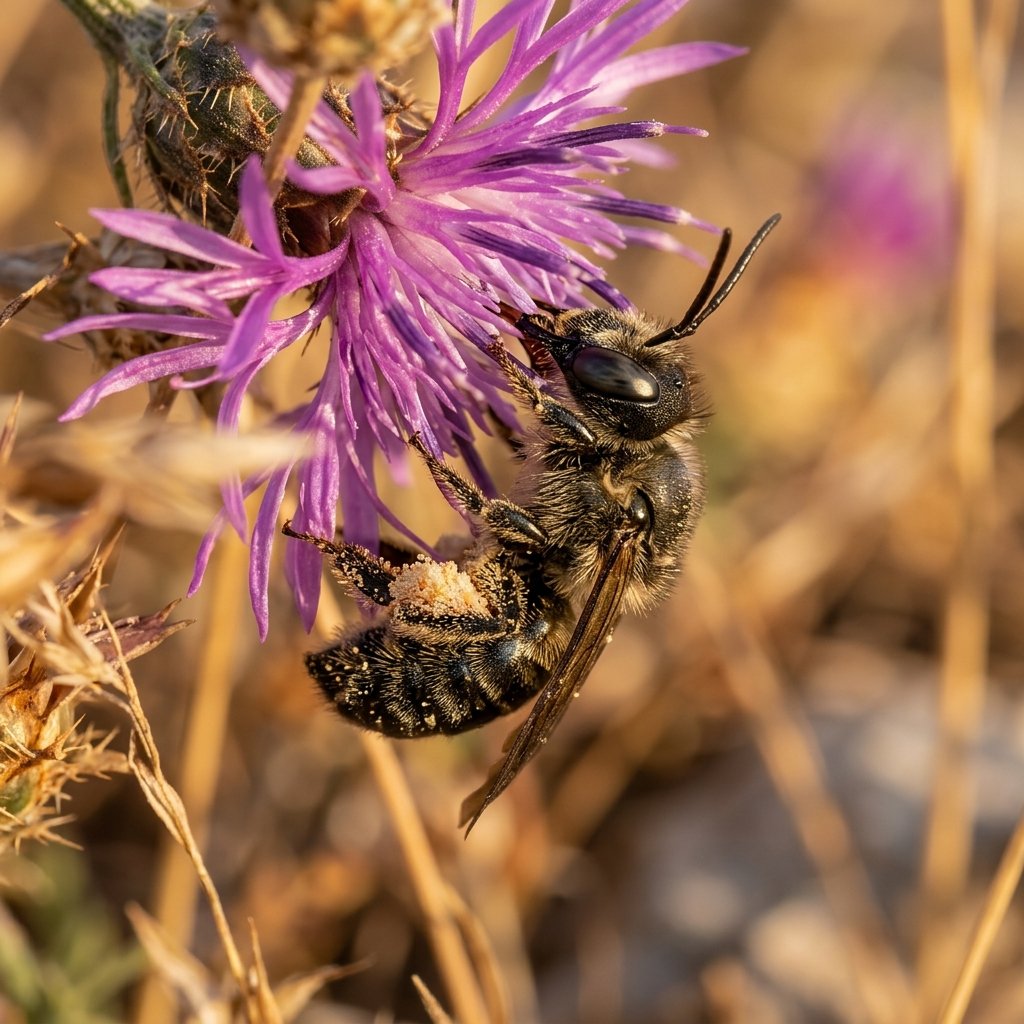
Often called the Large-toothed Leafcutter, this fuzzy architect is one of nature’s most industrious solitary bees. Instead of building large hives, these bees live life as "single parents," meticulously cutting perfect circles out of rose leaves or flower petals to build nursery pods for their offspring. They are quiet, hardworking, and essential pollinators for many wildflowers and garden vegetables.
🔍 How to Identify
- 🐝 The "Leafcutter" Shape: They have a stout, robust body, often appearing slightly flatter and broader than a standard honeybee.
- 🧶 Abdominal Scopa: Unlike honeybees that carry pollen on their legs, Megachile pilidens carries a "brush" of stiff, pale-to-orange hairs on the underside of its belly to transport pollen.
- ✂️ Specialized Jaws: Look closely and you might see their sharp, multi-toothed mandibles, which function like a pair of high-end tailor's shears for slicing through foliage.
🌲 Habitat & Ecology
- 🏗️ Solitary Nesting: They don't live in colonies. Females find existing holes in dead wood, hollow stems, or "bee hotels," lining each cell with overlapping leaf fragments to create a waterproof nursery.
- 🌸 Efficient Pollinators: They are "messy" foragers; because they carry pollen on their bellies, they end up transferring much more of it to flowers than many other bee species, making them a gardener’s best friend.
- ☀️ Summer Activity: You will mostly spot them during the warmest months of the year, zig-zagging between legumes (peas/beans) and composite flowers like daisies.
⚠️ Safety & Toxicity
- 🛡️ Status: Friend: These bees are exceptionally docile. Because they have no hive or queen to defend, they have no reason to be aggressive toward humans or pets.
- 🩹 The Sting: A female leafcutter can sting if she is physically squeezed or stepped on, but the sensation is far milder than a wasp or honeybee sting and typically results in only minor, short-lived irritation.
- 🌿 Plant Health: While they do cut holes in leaves, they rarely cause enough damage to harm the health of a plant; consider the missing leaf circles a "badge of honor" for a healthy ecosystem.
✨ Fun Fact
Leafcutter bees are the ultimate "origami" masters of the insect world. A single female may use over 30 individual pieces of leaf to construct a single nesting cell, carefully gluing them together with a mix of saliva and plant resins!
More Details








